To become a sport, cheer had to stop cheering
Acrobatics and tumbling and STUNT grew out of cheerleading and will hold their first NCAA championships in 2027. Their rise raises a question about the cheerleaders still on the sideline.
On April 26, 2026, in Azusa, California, the Quinnipiac University Bobcats reached the national final in acrobatics and tumbling. They lost to Baylor, 271.835 to 266.265.1 It was the last national championship the National Collegiate Acrobatics and Tumbling Association (NCATA) will run on its own. In spring 2027 the NCAA, which governs most US college sports, takes over.15
Fifteen years earlier, at the sport's first national championship in Eugene, Oregon, Quinnipiac was seeded last. There were only six teams in the whole sport.2 How did an activity that grew out of cheerleading go from six teams to an NCAA title? Part of the answer is that it stopped cheering.
Born in a lawsuit
The story starts with a fight over Title IX, the US law that requires fair sports chances for women. In 2009 Quinnipiac tried to cut women's volleyball while launching a competitive cheer team, and the volleyball players sued. That same year, Quinnipiac joined five other universities to formalize acrobatics and tumbling, a gymnastics-inspired offshoot of competitive cheer. USA Cheer, a nonprofit supported by the cheer company Varsity Brands, introduced a rival called STUNT.3
Quinnipiac coach Mary Ann Powers testified in the case: "I think what offends [cheerleaders] more than anything is other women degrading them and knocking what they do." Varsity founder Jeff Webb, also testifying, worried that the competitive version "creates confusion with the classical cheerleader team."3
In 2010 NPR visited the University of Maryland's competitive squad, whose members trained three hours a night, four nights a week. "It's just as demanding," said coach Jarnell Bonds. John Blake, then head of the NCATA, put the goal plainly: "We want these female athletes to be treated the same as the men's basketball team or the same as the baseball team."4
Two sports, one family tree
For years the two new sports were rivals. In 2011 an NCAA committee urged them to write a single proposal, and both said no. Janell Cook, the NCATA's executive director, remembers people in college athletics telling them "only one will make it."3
They draw on different athletes. In a 2023-24 survey, about 43 percent of acrobatics and tumbling athletes came from artistic gymnastics and 27 percent from competitive cheer. USA Cheer estimates that about 95 percent of STUNT athletes come from cheerleading. "Our whole entire sport was built from cheerleading skills," says USA Cheer's Lauri Harris. Even so, Powers admits, "I don't think the average person could tell whether they were watching" one sport or the other.3
In January 2026, both made it. NCAA members voted to make acrobatics and tumbling a championship sport and to add a STUNT championship.6 Fifty-two NCAA schools now sponsor acrobatics and tumbling at the varsity level.5 "It is a major win for the NCAA to add acrobatics and tumbling as a championship sport," said NCAA president Charlie Baker.6 Harris said STUNT "was created to give female athletes with a skillset derived from cheer a legitimate, competitive pathway."7
Opportunity or a numbers game?
Supporters see a clear win for women. In 2012 Nancy Hogshead-Makar of the Women's Sports Foundation said, "There's still a big gap between what boys and girls have, and schools need to add women's sports." Law professor Erin Buzuvis saw a chance at "creating a new sport that … for once, isn't just the female equivalent of a men's sport."8
The new sports also come with big rosters: up to 55 athletes in acrobatics and tumbling and 65 in STUNT under new limits. Missouri State added both. "We really could grow those to what, 120 [roster spots]?" said Casey Hunt, a senior athletics official there. That could mean "maybe we don't have to explore adding another sport program down the road."3 To some, that is smart planning. To others, it echoes the Quinnipiac case, where Title IX expert Donna Lopiano warned the school against cutting existing women's teams and "replacing them with an activity that has not been approved as a sport."3
Still on the sideline
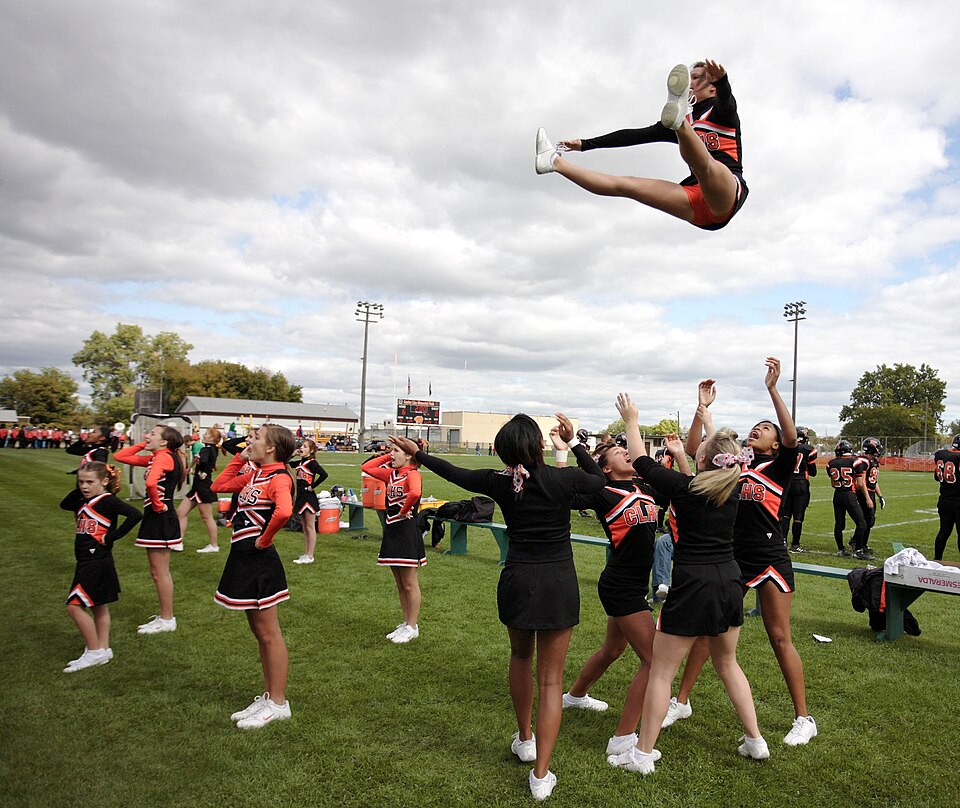
To be counted as a sport, cheer had to drop the cheering. Squads that lead crowds at football games are still not NCAA sports. Harris argues the new sports help those athletes anyway. "There's such a small number of opportunities at the college level for cheer," she says, and STUNT "has just kind of expanded more opportunities for high school cheerleaders to actually do something in college."3
Questions to think about
If cheer only counts as a sport once the cheering is removed, does that settle the debate or dodge it?
Should colleges earn Title IX credit by adding large new rosters, or only by adding sports that women already play?
Who should decide what counts as a sport: courts, the NCAA or the athletes themselves?
For the strongest arguments on each side, see our pro and con guide below.
Is cheerleading a sport?
- Quinnipiac Athletics, "Bobcats Claim Four NCATA Individual Event Titles," Quinnipiac University, April 26, 2026. Link
- Quinnipiac Athletics, "Acrobatics & Tumbling Travels To Oregon For Inaugural NCATA National Championships," Quinnipiac University, April 6, 2011. Link
- Sportico, "Rivals to Roommates: NCAA Acrobatics & Tumbling, Stunt Emerge Together," Sportico, 2025. Link
- Jamie Tarabay, "Competitive Cheerleading Fights For Official Status," NPR, October 21, 2010. Link
- NCATA, "NCAA Division I Votes to Create a National Collegiate Championship in Acrobatics & Tumbling," National Collegiate Acrobatics and Tumbling Association, January 14, 2026. Link
- NCAA, "NCAA elevates acrobatics and tumbling to championship status," NCAA, January 16, 2026. Link
- USA Cheer, "STUNT Advances to NCAA Championship Sport Status," USA Cheer, January 20, 2026. Link
- Charles Curtis, "Forget the Pompoms," The American Prospect, November 28, 2012. Link