California voted for art in every school. Then came the hard part
In 2022, voters set aside $1 billion a year for arts and music in public schools. Four years later, some schools have sent money back, a lawsuit is pending, and the state has rewritten the rules.
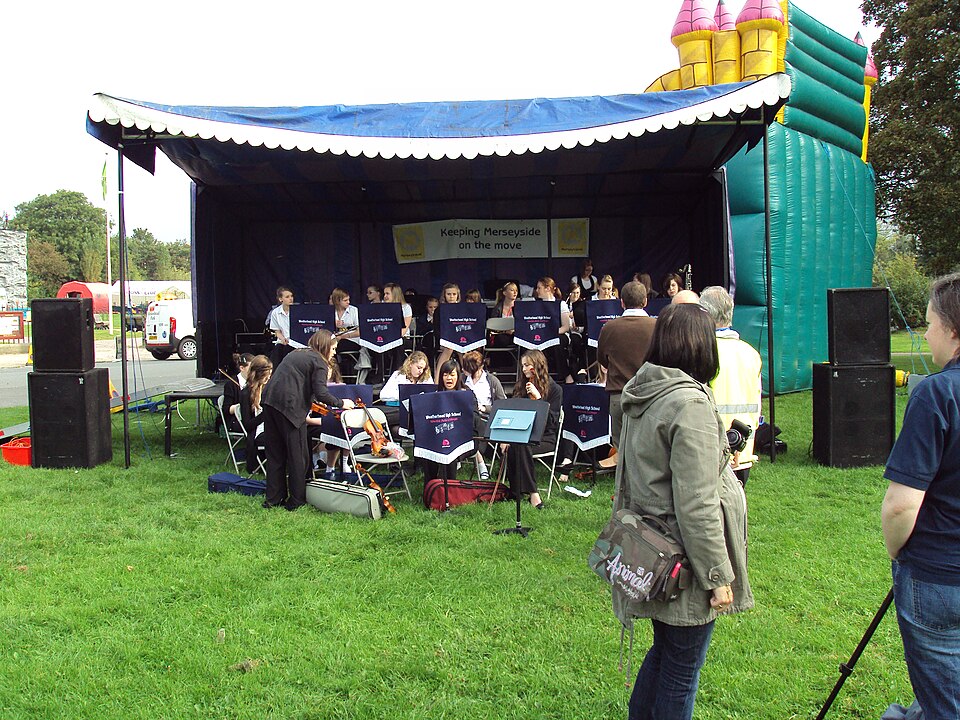
On October 2, 2022, students from San Pedro High School marched through their Los Angeles neighborhood beside Austin Beutner, the city's former schools chief. They were campaigning for Proposition 28, a ballot measure to pay for arts and music in California's public schools. Senior Miki Vasquez said art and music "lets us be who we want to be."1 A month later, more than 64 percent of voters said yes.2
The measure set aside about $1 billion a year, and schools must spend at least 80 percent of their share on arts staff.3 When it passed, barely one in five California schools had a full-time art or music teacher.4 Since 2023 the state has handed out more than $3 billion.5 Yet some schools have given the money back. California's story tests a question debaters argue about everywhere: what does it take to give every child the arts, and should anyone be made to?
A promise written into law
Beutner, who played cello in fifth grade and string bass in high school, gave more than $4 million to the campaign.1 Under the measure, schools with more low-income students get more money; otherwise funding follows enrollment. Los Angeles Unified, with about 400,000 students, received about $72 million last year. Death Valley Unified, with 21 students, received about $2,000.3
Not everyone liked a statewide rule. Some newspaper editorial boards called it "ballot box budgeting" that locks in spending.2 Lance Christensen of the California Policy Center wrote that he supported arts education but opposed the measure. "Money follows incentives better than mandates," he argued.6 Even friends of the arts saw trouble ahead. "Just because there is a requirement that the funding support educators doesn't mean there will be educators to hire," warned Mary Dell'Erba of the Arts Education Partnership.1
Money with nowhere to go
In many places, that warning came true. In 2024, Modoc Joint Unified, a rural district of about 800 students, had not spent its $134,000. "It's wonderful that voters want to help, and I appreciate the funding, but it would be great if we could spend it on things we actually need," said superintendent Tom O'Malley.4 A study by the research group SRI found that California is short about 5,000 arts teachers.7
Unspent money must go back to the state after three years. When the first three-year period ended in 2026, dozens, perhaps hundreds, of schools had spent nothing.3 Some feared being sued if they spent it wrongly.7 "We need clarity and confidence that we're doing this the right way," said Ed Manansala, El Dorado County's superintendent of schools.3 In Merced County, arts specialist Noelle Chandler described small districts where the principal is also "the superintendent and the bus driver and the lunch lady."5
Who keeps the promise?
The sharpest fight came in Los Angeles. In 2025, Beutner and the families of eight students sued Los Angeles Unified, saying it had used Prop 28 money to pay for arts teachers it already had instead of adding new ones. "LAUSD has willfully and knowingly violated the law," Beutner said. Superintendent Alberto Carvalho had explained in a memo that because of "historic staffing challenges in filling Arts educator roles," the district used the money "to cover existing staff as well as hire new staff."8 The district says its spending was legal, and the case is still pending.3
A new bill by Assemblymember Al Muratsuchi clears up the rules and lets schools pool money to share arts teachers. Beutner first said it would weaken the measure, then dropped his opposition after lawmakers added a line requiring districts to certify they follow every part of Prop 28. The bill passed unanimously.7 By the end of September, Governor Gavin Newsom had signed it.9 "For kids, this will mean more art," said Kyle Holmes of the California County Superintendents.7
Far from California, in England, the number of arts teachers in secondary schools fell 23 percent between 2010 and 2021, even as pupil numbers grew.10 And researchers still argue over what the arts deliver. In a large experiment, Brian Kisida and Daniel Bowen found that extra arts programs improved students' writing and behavior, but they "generally did not find evidence to suggest significant impacts on students' math, reading, or science achievement." They predicted the arts' value would become clearer "as policymakers begin to collect and value outcome measures beyond test scores."11
Questions to think about
If a school cannot find an arts teacher, is a requirement to offer the arts still worth having?
Should voters across a whole state decide how local schools spend money, or should local school boards?
What should count as success for arts classes: test scores, attendance, or something harder to measure?
For the strongest arguments on each side, see our pro and con guide below.
Should art and music be compulsory in schools?
- Linda Jacobson, "Arts education on the ballot: Inside Prop 28 and the campaign to boost K-12 spending by $800 million," LA School Report / The 74, October 31, 2022. Link
- CalMatters, "California Prop 28: Arts & Music Education Funding," CalMatters California Voter Guide 2022, September 6, 2022, updated May 10, 2023. Link
- Carolyn Jones, "Californians voted to spend $1 billion on K-12 arts. Why are schools returning the money?," CalMatters, August 13, 2026. Link
- Carolyn Jones, CalMatters, "California Spent Nearly $1 Billion to Boost Arts Education. Are Schools Misspending It?," KQED, June 1, 2024. Link
- Vani Sanganeria, "Why California rural schools struggle to expand arts education despite Prop. 28 windfall," EdSource, October 9, 2026. Link
- Lance Christensen, "Empower Schools to Fund the Arts, Don't Mandate It" (opinion), California Globe, October 22, 2022. Link
- Carolyn Jones, "California schools are sitting on arts money. A change in law might get them to spend it," CalMatters, September 3, 2026. Link
- Karen D'Souza and Mallika Seshadri, "Lawsuit charges misuse of arts education funding at LAUSD schools," EdSource, February 10, 2025. Link
- Carolyn Jones, CalMatters, "Schools were confused about K-12 arts funding. A new law adds clarity," KPBS, September 30, 2026. Link
- Cultural Learning Alliance, "Hours of arts teaching and number of arts teachers in England's secondary schools continue stable after years of decline," Cultural Learning Alliance, October 12, 2022. Link
- Brian Kisida and Daniel H. Bowen, "New evidence of the benefits of arts education," Brookings Institution, February 12, 2019. Link