← All topics
Politics and GovernmentBeginner to AdvancedWSDCBPPublic Forum

Should voting be compulsory?

Supporters say democracy works best when everyone takes part. Opponents say a free country should not punish people for staying home.
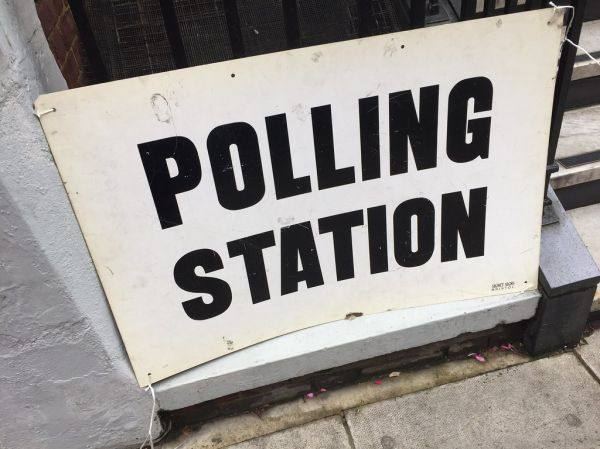
A polling station sign
Matt From London · CC BY 2.0
Motion: This House would make voting compulsory5 Pro · 5 Con · 30 sourcesEditor review: pending

Introduction

Compulsory voting means the law requires eligible citizens to take part in elections, with a penalty, usually a small fine, for anyone who stays away without a good reason. In practice, most systems only require people to show up or return a ballot. Nobody checks how they mark it, and in Australia a blank ballot simply counts as an informal vote.1

The idea is more than a century old. Belgium made voting compulsory in the years after it widened the right to vote in 1893, and Australia followed for federal elections in 1924, hoping to raise turnout and cut what parties spent on campaigns.23 It worked quickly: turnout jumped from 59.38% in 1922 to 91.38% at the 1925 election.4

Today the picture is mixed. International IDEA lists about 40 countries with compulsory voting laws, from Argentina and Brazil to Belgium and Singapore, but in roughly half of them the law is not enforced, and IDEA admits that any exact count is “quite arbitrary.”5 Australia enforces its law firmly: 90.7% of enrolled voters turned out in 2025, and about 1.3 million people were sent notices asking why they had not voted.67 Brazil's fine is tiny, at R$3.51, but an unpaid fine can block a passport or a government salary.8

The United States has no such law. In the 2024 presidential election, 65.3% of US citizens voted. Turnout reached 74.7% among people 65 and older, while less than half of 18-to-24-year-olds voted.9 In 2020 a Brookings Institution and Harvard working group called for universal voting in the US, warning that “Low turnout is aggravated by the hyper-polarization in our political life.”10

Some places have recently changed course. Chile made voting compulsory in 2022, after several elections with very low turnout. In the first round of its 2025 presidential election, turnout hit 84.4%, compared with 47.6% in 2021.11 Flanders, in northern Belgium, went the other way. Its October 2024 local elections were the first without compulsory attendance, and turnout fell to 63.5%.12 In Washington state, a 2023 bill would have required every eligible resident to return a ballot, with no penalty. One state senator called it “an unconstitutional, un-American distraction.”13

The debate turns on a few big questions. Political scientist Arend Lijphart argued that low turnout is also unequal turnout, because less well-off citizens vote less, and that the advantages of compulsory voting “far outweigh” the objections.14 Philosopher Jason Brennan argues in a 2014 book that compulsory voting is “unjust and a petty violation of citizens' liberty.”15 Critics also ask whether forced voters will be informed ones, whether penalties are fair to the poor, and whether gentler reforms, like automatic registration, could raise turnout without punishing anyone.14 Others warn that compulsion can hide distrust instead of curing it: even in Australia, only 25% of people said in 2019 that people in government can be trusted.16

Key terms

Compulsory voting
A law that requires eligible citizens to take part in elections, with a penalty for those who do not have a valid reason.
Turnout
The share of eligible or registered voters who actually cast a ballot in an election.
Informal vote
A ballot that cannot be counted, because it is left blank or filled in incorrectly.
Donkey vote
A ballot numbered straight down the page in the order the candidates are printed, often a sign the voter did not think about the choice.
Conscientious objector
Someone who refuses to do something on grounds of conscience. Washington state's 2023 bill would have let people opt out this way.
Voter apathy
A lack of interest in voting or politics, often because people feel their vote does not matter or do not trust politicians.
Civic duty
Something citizens are expected to do for the good of the community, like paying taxes or serving on a jury.
Automatic voter registration
A system that signs up eligible citizens to vote when they deal with a government office, such as a motor vehicle agency.

Pros and cons at a glance

Pro: make it compulsory

    Con: keep it voluntary

      Pro arguments

      Con arguments

      Key clashes

      Most compulsory voting debates are won or lost on these four questions.

      1Is voting a right or a duty?

      A question of principle about what citizens owe their country.

      Pro saysLike jury service, voting is a small duty that keeps democracy working for everyone, and the penalty is tiny.10
      Con saysA right includes the right not to use it. Forcing people to the polls is a violation of liberty, however small.15

      2Does more turnout mean better, more moderate government?

      Both sides agree turnout rises. They disagree about what that achieves.

      Pro saysWhen everyone votes, the most committed partisans lose their outsized say, so parties must win over the less engaged middle.1719
      Con saysMany reluctant voters know little about politics, and in Switzerland compulsion moved results to the left, not to the centre.2820

      3Does high turnout make the result more legitimate?

      A question about what a government's mandate really rests on.

      Pro saysA government chosen by nearly everyone speaks for everyone. When Flanders dropped the rule in 2024, turnout fell to 63.5%.1512
      Con saysForced turnout manufactures a mandate. Staying home or voting blank can be a deliberate protest, and India's top court treats not voting as free expression.291

      4Is a penalty fair?

      Even a small fine raises hard questions about enforcement.

      Pro saysFines are tiny, blank ballots are allowed, and some proposals have no penalty at all.13
      Con saysMillions of notices, court fines and lost services fall hardest on the people least able to cope.78

      Around the world

      Australia: voting has been compulsory in federal elections since 1924, and turnout was 90.7% in 2025.36

      Latin America: Argentina, Brazil, Chile, Peru and Uruguay all enforce compulsory voting.5

      Europe: Belgium and Luxembourg still require voting.5 The Netherlands abolished compulsory voting in 1970, and Flanders dropped it for local elections in 2024, after which turnout fell to 63.5%.2712

      The US: there is no national requirement. A 2023 Washington state bill would have required residents to return a ballot, with no penalty.13

      Debate tip: comparing countries is useful evidence on both sides. Pro can point to Australia and Chile; Con can point to the Netherlands and Flanders, and argue that each country should decide by its own values.
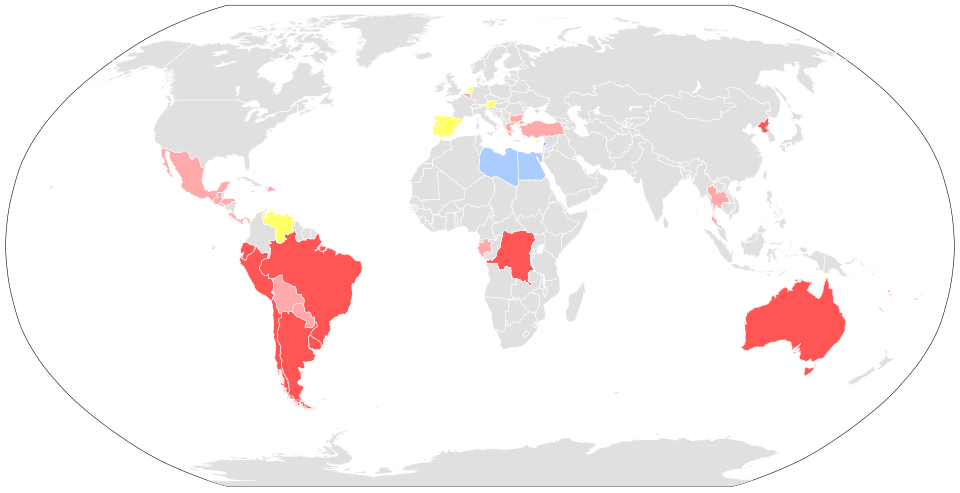
      World map of countries with compulsory voting laws
      Countries with compulsory voting laws.Compulsory and enforcedCompulsory but not enforcedCompulsory for men onlyHad compulsory voting in the pastSPQRobin · CC0

      Discussion questions

      For class or club discussion. There are no right answers; ask for reasons and evidence.

      1. Should voting be compulsory? Explain your answer using at least one argument from each side.
      2. Is voting more like jury duty, which the state can require, or more like free speech, which includes the right to stay silent?
      3. If compulsory voting raised turnout but did not make voters better informed, would it still be worth it? Why or why not?
      4. Should voters be allowed to hand in a blank ballot or choose “none of the above”? Does that make a compulsory law fair, or pointless?
      5. Australia charges non-voters a $20 penalty. What penalty, if any, would be fair, and who should be excused?

      Sources

      1. Australian Electoral Commission, “Analysis of informal voting: 2025 federal election.” LinkGovernment report
      2. Maïthé Chini and Ciara Carolan, “Why does Belgium have ‘compulsory’ voting and what if it was abolished?” The Brussels Times, March 5, 2024. LinkNews report
      3. Australian Electoral Commission, “Electoral Backgrounder: Compulsory voting,” updated March 3, 2025. LinkGovernment agency
      4. Australian Electoral Commission, “Compulsory voting in Australia.” LinkGovernment report
      5. International IDEA, “Compulsory Voting,” Voter Turnout Database. LinkInternational body
      6. Australian Electoral Commission, “Participation in the 2025 federal election.” LinkGovernment data
      7. Bernama, “Australian Electoral Commission reports 200,000 fines issued over 2025 election no-shows,” Malay Mail, July 30, 2026. LinkNews report
      8. “Multa para quem não vota é de R$ 3,51, valor que não é reajustado desde 1993,” Bem Paraná, July 17, 2026. LinkNews report
      9. USAFacts, “How many Americans voted in 2024?” June 18, 2025, using US Census Bureau data. LinkGovernment data, via nonprofit
      10. Universal Voting Working Group, Lift Every Voice: The Urgency of Universal Civic Duty Voting, Brookings Institution and Harvard Ash Center, July 2020. LinkThink tank report
      11. EFE, “Chile registra participación récord del 85 % en la primera vuelta por el voto obligatorio,” El Heraldo, November 17, 2025. LinkNews report
      12. “Without mandatory voting, young, less educated voters tend to stay away, report shows,” The Brussels Times, April 22, 2025. LinkNews report
      13. Oregon Public Broadcasting, report on Washington state’s mandatory voting proposal (Senate Bill 5209), January 29, 2023. LinkNews report
      14. Arend Lijphart, “Unequal Participation: Democracy's Unresolved Dilemma,” American Political Science Review 91, no. 1, 1997. LinkPeer-reviewed research
      15. Jason Brennan and Lisa Hill, Compulsory Voting: For and Against, Cambridge University Press, 2014. LinkAcademic book
      16. Sarah Cameron and Ian McAllister, The 2019 Australian Federal Election: Results from the Australian Election Study, Australian National University, December 2019. LinkUniversity research
      17. Pew Research Center, “Political Polarization in the American Public,” June 12, 2014. LinkResearch nonprofit
      18. Knight Foundation, “New study sheds light on the 100 million Americans who don't vote, their political views and what they think about 2020,” press release on The 100 Million Project, February 19, 2020. LinkFoundation report
      19. Bert Gambini, “Compulsory voting can reduce political polarization in the U.S., according to UB study,” University at Buffalo, February 15, 2024, on research by Alexandra Oprea, Lucy Martin and Geoffrey Brennan in the American Political Science Review. LinkUniversity
      20. Michael M. Bechtel, Dominik Hangartner and Lukas Schmid, “Does Compulsory Voting Increase Support for Leftist Policy?” American Journal of Political Science 60, no. 3, 2016. LinkPeer-reviewed research
      21. Australian Electoral Commission, “Australia's largest ever federal election kicks off,” updated March 28, 2025. LinkGovernment agency
      22. Enrico Cantoni and Vincent Pons, “Strict ID Laws Don't Stop Voters: Evidence from a U.S. Nationwide Panel, 2008–2018,” NBER Working Paper 25522, 2019, published in the Quarterly Journal of Economics, 2021. LinkPeer-reviewed research
      23. Laurent Bouton, Garance Genicot, Micael Castanheira and Allison L. Stashko, “Pack-Crack-Pack: Gerrymandering with Differential Turnout,” NBER Working Paper 31442, July 2023, revised October 2024. LinkWorking paper
      24. Jill Sheppard, “Enforced compulsory voting results in more evenly distributed political knowledge,” LSE European Politics and Policy blog, October 21, 2015, on her study in Electoral Studies 40, 2015. LinkUniversity
      25. Peter John Loewen, Henry Milner and Bruce M. Hicks, “Does Compulsory Voting Lead to More Informed and Engaged Citizens? An Experimental Test,” Canadian Journal of Political Science 41, no. 3, 2008. LinkPeer-reviewed research
      26. Anthony Fowler, “Electoral and Policy Consequences of Voter Turnout: Evidence from Compulsory Voting in Australia,” Quarterly Journal of Political Science 8, no. 2, 2013. LinkPeer-reviewed research
      27. Leiden University, “Why is there no longer compulsory voting in the Netherlands?” November 21, 2023. LinkUniversity
      28. Annenberg Public Policy Center, “Americans Know Surprisingly Little About Their Government, Survey Finds,” September 17, 2014. LinkUniversity research center
      29. Gautam Bhatia, “Indian Supreme Court Upholds the Right to Negative Voting,” Oxford Human Rights Hub, October 9, 2013. LinkLegal analysis
      30. Stefanie Gäbler, Niklas Potrafke and Felix Rösel, “Compulsory Voting and Political Participation: Empirical Evidence from Austria,” ifo Working Paper No. 315, 2019. LinkWorking paper

      Arguments marked “Evidence needed” are waiting for a source before this guide goes live.

      You might also debate

      Practise this topic

      Suggest an argument or source

      Anyone can suggest improvements. An editor checks every suggestion and source before it's added, and you're credited by name.

      Mockup: suggestions aren't saved yet.