← All topics
Health and MedicineBeginner to AdvancedWSDCBPPublic Forum

Should vaping be banned?

Supporters say vapes hook a new generation on nicotine. Opponents say they help smokers quit something far deadlier.
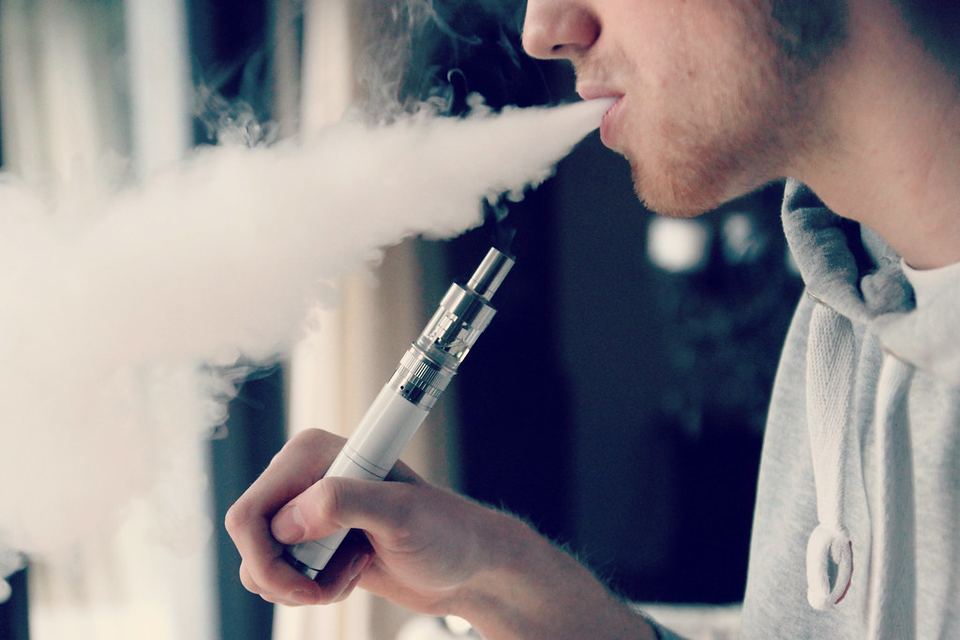
A person exhaling a cloud of vapor from an e-cigarette
Vaping360 · CC BY 2.0
Motion: This House would ban e-cigarettes5 Pro · 5 Con · 27 sourcesEditor review: pending

Introduction

An e-cigarette, or vape, is a battery-powered device that heats a liquid into an aerosol that the user breathes in.5 Most contain nicotine, the drug in tobacco, which is highly addictive.12 Banning vaping can mean a total ban on sales, as in India, or a ban on certain kinds, such as flavored or disposable vapes.

Vapes became popular as a less harmful way for smokers to get nicotine. In 2015, Public Health England said “the current best estimate is that e-cigarettes are around 95% less harmful than smoking.”10 Then teenagers took them up. By 2019, 27.5% of American high school students were vaping.3

Countries have split. In 2023 the World Health Organization (WHO) counted 34 countries that ban the sale of e-cigarettes and 74 with no rules for them at all.4 India banned their production and sale in 2019, with up to a year in prison for a first offense.18 Since July 2024, Australia has allowed vapes to be sold only in pharmacies.15 WHO's Director-General, Tedros Adhanom Ghebreyesus, warns: “Kids are being recruited and trapped at an early age to use e-cigarettes and may get hooked to nicotine.”4

In the United States, vapes are legal for adults 21 and over, but each product needs authorization from the Food and Drug Administration (FDA), which had authorized 39 by July 2025.21 Youth vaping has fallen: 1.63 million middle and high school students (5.9%) vaped in 2024, down from 2.13 million the year before. Of those users, 87.6% chose flavored products.1 Among adults, use rose from 4.5% in 2019 to 6.5% in 2023.25

Safety is still argued over. In 2019 and early 2020, 2,807 Americans were hospitalized or died with a lung injury linked to vaping, and 68 of them died.6 Most had used vapes containing THC, the main drug in cannabis, bought from friends or dealers, and investigators found that vitamin E acetate, an additive, was “strongly linked” to the outbreak.7 The US National Academies of Sciences found in 2018 that the long-term health effects of vaping “are not yet clear.”11

Vapes can also help people stop smoking. A 2025 Cochrane review found that out of every 100 smokers given nicotine vapes, about 9 quit for at least six months, compared with about 6 given nicotine patches or gum.8 That matters because tobacco kills more than 7 million people every year.5

The debate turns on three questions. Whose health should come first: teenagers who might start vaping, or adult smokers who might quit with its help? Are vapes a gateway into smoking or a way out of it? And does a ban actually stop vaping, or does it hand the trade to criminals? In January 2024, the UK's prime minister, Rishi Sunak, explained why his government was banning disposable vapes: “As any parent or teacher knows, one of the most worrying trends at the moment is the rise in vaping among children.”13

Key terms

E-cigarette
A battery-powered device that heats a liquid, usually containing nicotine and flavorings, into an aerosol that is breathed in. Also called a vape.
Nicotine
The highly addictive drug found in tobacco and in most vapes. It can harm the developing brains of teenagers.
Disposable vape
A single-use vape that comes pre-filled and is thrown away when it runs out, rather than being refilled or recharged.
Flavor ban
A law that stops the sale of vapes in flavors such as fruit or candy, often leaving only tobacco or menthol.
Harm reduction
Lowering the damage a habit causes rather than demanding people stop completely, for example by switching smokers from cigarettes to vapes.
Nicotine replacement therapy
Medicines such as patches, gum and lozenges that give smokers nicotine without smoke to help them quit.
Gateway effect
The idea that using one product, such as vapes, makes people more likely to move on to another, such as cigarettes.
Black market
Illegal trade in goods that are banned or restricted. Products sold this way are not checked for safety.

Pros and cons at a glance

Pro: ban them

    Con: keep them legal

      Pro arguments

      Con arguments

      Key clashes

      Most vaping debates are won or lost on these four questions.

      1Whose health comes first: teenagers or adult smokers?

      The same product can hurt one group and help another.

      Pro saysTeenagers who never smoked are getting hooked on nicotine, and protecting children should come before the convenience of adults.1
      Con saysMillions of adults still smoke, and vapes help more of them quit than patches or gum do. A ban takes that tool away.8

      2Are vapes safe enough to sell?

      Both sides agree vapes are not harmless. They disagree about what to compare them with.

      Pro saysNobody knows the long-term effects yet, and WHO says e-cigarettes are harmful and not safe.511
      Con saysThe right comparison is cigarettes, which kill more than 7 million people a year. Switching cuts exposure to many toxic chemicals.511

      3Gateway or off-ramp?

      Vapes might lead people into smoking, or out of it.

      Pro saysYoung people who vape are more likely to try cigarettes later.11
      Con saysWhere vaping has grown, smoking has kept falling, as in New Zealand and England.2610

      4Do bans work?

      A law on paper is not the same as a change on the street.

      Pro saysClear bans send a strong message, make enforcement simpler and have already been adopted by dozens of countries.4
      Con saysBans push buyers to illegal sellers whose products are never checked, as Australia's seizures and the 2019 lung injury outbreak show.177

      Around the world

      The US: vapes are legal for adults 21 and over, but only products the FDA has authorized may be sold, and it had authorized 39 by July 2025.21

      Full bans: 34 countries ban the sale of e-cigarettes, including India, which banned their production, sale and advertising in 2019.418

      Middle paths: the UK banned single-use vapes in 2025, and Australia sells vapes only through pharmacies.1415 In New Zealand, more adults now vape daily (11.1%) than smoke daily (6.9%).26

      Debate tip: comparing countries is useful evidence on both sides. Pro can point to countries that ban vapes outright; Con can point to places where smoking fell as vaping rose, or where restrictions fed a black market.

      Discussion questions

      For class or club discussion. There are no right answers; ask for reasons and evidence.

      1. Should vaping be banned? Explain your answer using at least one argument from each side.
      2. If a product helps some adults quit smoking but tempts some teenagers to start, how should a government weigh those two groups?
      3. Cigarettes are more harmful than vapes but remain legal in most countries. Is it fair to ban the safer product and not the more dangerous one?
      4. Is banning flavors or disposable vapes a sensible middle path, or does it only move users to other products?
      5. How should a government decide whether a ban is working when people can still buy the product illegally?

      Sources

      1. US Food and Drug Administration, “Results from the Annual National Youth Tobacco Survey,” 2024 findings. LinkGovernment report
      2. US Centers for Disease Control and Prevention, “Youth Tobacco Product Use at a 25-Year Low, Yet Disparities Persist,” October 17, 2024. LinkGovernment report
      3. US Centers for Disease Control and Prevention, “6.2 million middle and high school students used tobacco products in 2019,” December 5, 2019. LinkGovernment report
      4. World Health Organization, “Urgent action needed to protect children and prevent the uptake of e-cigarettes,” December 14, 2023, via the Pan American Health Organization. LinkInternational body
      5. World Health Organization, “Tobacco and nicotine,” fact sheet, June 26, 2026. LinkInternational body
      6. US Centers for Disease Control and Prevention, “CDC, States Update Number of Hospitalized EVALI Cases and EVALI Deaths,” February 25, 2020. LinkGovernment report
      7. US Centers for Disease Control and Prevention, “Outbreak of Lung Injury Associated with the Use of E-Cigarette, or Vaping, Products,” 2020. LinkGovernment report
      8. Cochrane living systematic review of electronic cigarettes for smoking cessation, briefing for health professionals and policymakers, University of Oxford Centre for Evidence-Based Medicine, 2025. LinkPeer-reviewed review
      9. Peter Hajek and others, “A Randomized Trial of E-Cigarettes versus Nicotine-Replacement Therapy,” New England Journal of Medicine, February 14, 2019. LinkPeer-reviewed study
      10. Public Health England, “E-cigarettes around 95% less harmful than tobacco estimates landmark review,” August 19, 2015. LinkGovernment report
      11. National Academies of Sciences, Engineering, and Medicine, “Public Health Consequences of E-Cigarettes,” news release, January 23, 2018. LinkNational research body
      12. US Centers for Disease Control and Prevention, “E-Cigarette Use Among Youth.” LinkGovernment report
      13. UK Government, “Disposable vapes banned to protect children's health,” January 29, 2024. LinkGovernment announcement
      14. UK Government, “Single-use vapes banned from 1 June 2025,” May 31, 2025. LinkGovernment announcement
      15. Australian Therapeutic Goods Administration, guidance on vaping reforms from July 1 and October 1, 2024. LinkGovernment regulator
      16. Cancer Council NSW, “Generation Vape takes the first look at the impact of Australia's vaping laws,” January 23, 2025. LinkHealth charity research
      17. Alex Mitchell, “Low pharmacy vaping uptake fuels black market fears,” The Canberra Times (AAP), June 16, 2025. LinkNews report
      18. “India bans e-cigarettes, e-hookahs; 31st to do so,” The Tribune (India), September 19, 2019. LinkNews report
      19. “Juul to pay $462 million to 6 states and D.C. over youth marketing,” WBUR (Associated Press), April 13, 2023. LinkNews report
      20. “The FDA orders Juul to pull all of its vaping products from the U.S. market,” NPR, via Georgia Public Broadcasting, June 23, 2022. LinkNews report
      21. US Food and Drug Administration, “FDA Authorizes Marketing of Tobacco- and Menthol-Flavored JUUL E-Cigarette Products,” July 17, 2025. LinkGovernment announcement
      22. US Food and Drug Administration, “HHS, CBP Seize $86.5 Million Worth of Illegal E-Cigarettes in Largest-Ever Operation,” September 10, 2025. LinkGovernment announcement
      23. Yale News, “Ban on flavored vaping may have led teens to cigarettes, study suggests,” May 25, 2021, on Abigail Friedman's study in JAMA Pediatrics. LinkUniversity news, peer-reviewed study
      24. “Massachusetts bans sale of all vaping products for 4 months,” CNBC, September 24, 2019. LinkNews report
      25. National Center for Health Statistics, “Electronic Cigarette Use Among Adults in the United States, 2019–2023,” NCHS Data Brief No. 524, January 2025. LinkGovernment report
      26. New Zealand Ministry of Health, “Trends in smoking and vaping,” New Zealand Health Survey 2023/24. LinkGovernment survey
      27. Faegre Drinker, “Supreme Court Decides Food and Drug Administration v. Wages and White Lion Investments, LLC,” April 2025, on the ruling of April 2, 2025. LinkCourt ruling, via law firm

      Arguments marked “Evidence needed” are waiting for a source before this guide goes live.

      You might also debate

      Practise this topic

      Suggest an argument or source

      Anyone can suggest improvements. An editor checks every suggestion and source before it's added, and you're credited by name.

      Mockup: suggestions aren't saved yet.