← All topics
Environment and AnimalsBeginner to AdvancedWSDCBPPublic Forum

Should there be a tax on carbon emissions?

Supporters say making pollution cost money is the cheapest way to fight climate change. Opponents say it hits ordinary families and voters keep rejecting it.
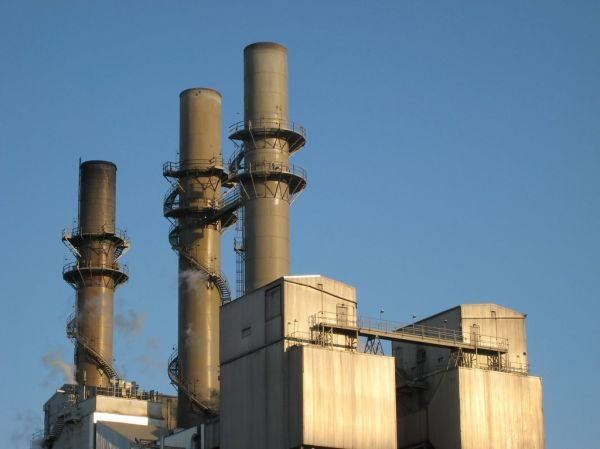
Smokestacks releasing smoke into the sky
Doug Waldron · CC BY-SA 2.0
Motion: This House would introduce a carbon tax5 Pro · 5 Con · 28 sourcesOctober 2026

Introduction

A carbon tax is a charge that a government puts on fossil fuels such as coal, oil and gas, based on how much carbon dioxide (CO2) they release when burned. CO2 is the main gas driving climate change. The idea is simple: if polluting costs more, people and businesses will pollute less and switch to cleaner choices. Some governments hand the money back to households, while others spend it or use it to cut other taxes.

The idea is not new. Sweden introduced a carbon tax in 1991, at SEK 250 (about EUR 23) per tonne of CO2.1 In 2019, a statement signed by 27 Nobel Prize-winning economists and four former chairs of the US Federal Reserve declared: “A carbon tax offers the most cost-effective lever to reduce carbon emissions at the scale and speed that is necessary.”23

Today carbon prices are spreading but are still patchy. In 2025, 80 carbon taxes and emissions trading systems were operating around the world, covering about 28% of global greenhouse gas emissions and raising more than $100 billion in 2024.4 Yet the World Bank found in 2024 that less than 1% of global emissions faced a carbon price at or above the level experts recommend.5 Meanwhile, emissions from fossil fuels were projected to hit a record 38.1 billion tonnes in 2025.6

Supporters point to success stories. By 2026 Sweden's tax had risen to SEK 1,520 (about EUR 138) per tonne for coal and natural gas.1 Sweden's then finance minister, Magdalena Andersson, said in 2016: “We’ve had GDP growth of 60 percent, and at the same time, our emissions have been reduced by 25 percent.”7 In the European Union, emissions from the power plants and factories covered by its carbon market are now around 50% below 2005 levels.8

The backlash has been just as real. In France, planned fuel tax rises sparked the “yellow vest” protests in 2018, in which four people died and hundreds were injured. The government dropped the increase, with Prime Minister Édouard Philippe saying, “No tax is worth jeopardizing the unity of the nation.”910 Australia repealed its carbon tax in 2014, two years after introducing it.11 Washington state voters rejected a carbon tax in 2016 and a carbon fee in 2018.1213 In March 2025, on his first day as prime minister, Canada's Mark Carney scrapped the national consumer carbon price, making gasoline 17.6 cents a litre cheaper.14

The United States has never had a national carbon tax. In 2023, the Environmental Protection Agency estimated that each metric ton of CO2 emitted causes $190 worth of damage to society.15 In a 2024 survey, 54% of Americans supported taxing greenhouse gas emissions, down from 66% in 2020, while only 28% backed higher gasoline taxes.16

The debate turns on three questions. Does a carbon tax cut emissions enough to matter? Who ends up paying for it? And can one country act alone when climate change is a global problem?

Key terms

Carbon tax
A fee on fossil fuels or emissions, set per tonne of carbon dioxide released.
Emissions trading system
Also called cap and trade. The government caps total emissions and companies buy and sell permits to pollute, which creates a carbon price.
Carbon dividend
Money from a carbon tax returned to people, usually as equal payments to every household or resident.
Revenue neutral
A tax design where every dollar raised is given back through rebates or cuts to other taxes, so the government does not grow.
Social cost of carbon
An estimate, in dollars, of the damage done to society by releasing one more tonne of CO2.
Carbon leakage
When a carbon price pushes production, and its emissions, to countries with weaker climate rules.
Border carbon adjustment
A charge on imports that makes foreign goods pay a carbon price similar to the one local producers pay.
Regressive tax
A tax that takes a larger share of income from poorer households than from richer ones.

Pros and cons at a glance

Pro: tax carbon

    Con: don't tax carbon

      Pro arguments

      Con arguments

      Key clashes

      Most carbon tax debates are won or lost on these four questions.

      1Does a carbon tax actually cut emissions?

      Both sides agree on the goal. They disagree on whether this tool delivers.

      Pro saysThe evidence is in. Sweden's transport emissions fell by almost 11% and British Columbia's emissions by about 5% to 15%.1719
      Con saysGlobal emissions are still hitting records, and almost no carbon price is high enough to change that.65

      2Who really pays?

      Everything depends on what happens to the money.

      Pro saysReturn the money as equal rebates and most families come out even or ahead, as Canada's budget officer found.22
      Con saysEnergy costs take a far bigger share of poorer families' incomes, and rebates are only an average.26

      3Can it survive politics?

      A climate policy only works if it lasts.

      Pro saysBritish Columbia's tax faced majority opposition at first but won general public support within three years.19
      Con saysAustralia, France and Canada all backed down. A policy voters keep rejecting is not a serious plan.111014

      4Should one country go first?

      Climate change is global, but taxes are national.

      Pro saysThe world is already moving. China has a national carbon market and the EU now charges carbon on some imports.2425
      Con saysGoing first risks pushing factories and their emissions abroad, which cancels out part of the benefit.27

      Around the world

      Europe: Sweden has one of the world's highest carbon taxes, SEK 1,520 per tonne for coal and natural gas in 2026.1 The EU's carbon market covers power and heavy industry, and since January 2026 the EU also puts a carbon charge on imports of goods such as steel, cement and aluminium.825

      North America: The US has no national carbon tax, and Washington state voters rejected one twice.1213 Canada ended its consumer carbon price in 2025 but kept its price on large industrial emitters.14

      Asia: China's national carbon market began in 2021 with about 2,200 coal power companies and is expanding to steel, cement and aluminum, so that it will cover more than 60% of China's CO2 emissions.24

      The global picture: 80 carbon pricing systems cover about 28% of global emissions, up from 12% ten years earlier.4

      Debate tip: comparing countries helps both sides. Pro can point to Sweden and the spread of carbon prices; Con can point to how often voters in Australia, France and Canada turned against them.

      Discussion questions

      For class or club discussion. There are no right answers; ask for reasons and evidence.

      1. Should there be a tax on carbon emissions? Explain your answer using at least one argument from each side.
      2. If a carbon tax raises money, should it go back to families, pay for clean energy, or cut other taxes? Who wins and loses under each choice?
      3. Is it fair to ask people who must drive long distances to work to pay more for fuel? What could make it fairer?
      4. Should a country tax carbon even if bigger polluters do not? Why or why not?
      5. Are rewards, such as clean energy tax breaks, better than penalties, such as carbon taxes? What does each approach get right?

      Sources

      1. Government Offices of Sweden, “Sweden's carbon tax.” LinkGovernment page
      2. Climate Leadership Council, “Economists' Statement on Carbon Dividends,” first published in The Wall Street Journal, January 17, 2019. LinkAdvocacy group's own statement
      3. “Economists: It's Time for a Carbon Tax That Pays Dividends,” The Fiscal Times, January 17, 2019. LinkNews report
      4. World Bank, “Global Carbon Pricing Mobilizes Over $100 Billion for Public Budgets,” press release on State and Trends of Carbon Pricing 2025, June 10, 2025. LinkInternational body
      5. World Bank, “Global Carbon Pricing Revenues Top a Record $100 Billion,” press release on State and Trends of Carbon Pricing 2024, May 21, 2024. LinkInternational body
      6. Global Carbon Project, “Fossil fuel CO2 emissions hit record high in 2025,” Global Carbon Budget 2025, November 13, 2025. LinkScientific research
      7. World Bank, “When it comes to emissions, Sweden has its cake and eats it too,” May 16, 2016. LinkInternational body
      8. European Commission, “EU Emissions Trading System has reduced emissions in the sectors covered by 50% since 2005,” April 4, 2025. LinkGovernment report
      9. Simon Carraud and Michel Rose (Reuters), “As ‘yellow vest’ protests ramp up, Macron suspends fuel-tax increases,” The Christian Science Monitor, December 4, 2018. LinkNews report
      10. “France scraps 2019 fuel tax increase for good in face of continued protests,” CBC News, December 5, 2018. LinkNews report
      11. John Zubrzycki, “Australia repeals controversial carbon tax. Will others follow?” The Christian Science Monitor, July 17, 2014. LinkNews report
      12. “Washington State Voters Reject Nation's First Carbon Tax,” Inside Climate News, November 9, 2016. LinkNews report
      13. KOMO staff and Associated Press, “Voters reject carbon fee initiative, approve grocery tax ban,” KATU, November 6, 2018. LinkNews report
      14. “Prime Minister Mark Carney's government terminates consumer carbon price,” CP24, March 14, 2025. LinkNews report
      15. Joshua Bledsoe, Kevin Homrighausen and John Detrich, “New report raises social cost of carbon estimates,” on the US EPA's final report of December 2, 2023, Global Environmental Law blog, January 2024. LinkGovernment report, via legal analysis
      16. Jon A. Krosnick and Bo MacInnis, “Climate Insights 2024: American Climate Policy Opinions,” Resources for the Future and Stanford University, August 27, 2024. LinkSurvey research
      17. Julius J. Andersson, “Carbon Taxes and CO2 Emissions: Sweden as a Case Study,” American Economic Journal: Economic Policy 11, no. 4 (November 2019): 1–30. LinkPeer-reviewed study
      18. Chris Fleisher, “An efficient way to reduce emissions,” American Economic Association Research Highlights, November 15, 2019. LinkResearch summary
      19. Brian Murray and Nicholas Rivers, “British Columbia's revenue-neutral carbon tax: A review of the latest ‘grand experiment’ in environmental policy,” Energy Policy 86 (2015): 674–683. LinkPeer-reviewed study
      20. “B.C. scrapping provincial carbon tax after Carney kills it federally,” CBC News, March 2025. LinkNews report
      21. “IMF says fossil fuel subsidies hit $7 trillion in 2022,” Argus Media, August 24, 2023. LinkInternational body, via news report
      22. CBC News, report on the Parliamentary Budget Officer's corrected analysis of carbon pricing, October 10, 2024. LinkGovernment report, via news report
      23. Keystone-SDA, “576 million francs premium from environmental levies,” blue News, November 15, 2025. LinkNews report
      24. State Council of the People's Republic of China, “Three additional industries added to carbon trading market,” March 2025. LinkGovernment report
      25. European Commission, “Carbon Border Adjustment Mechanism.” LinkEU law
      26. Congressional Budget Office, “Distributional Effects of Reducing Carbon Dioxide Emissions With a Carbon Tax,” Working Paper 2021-11, September 13, 2021. LinkGovernment report
      27. Mauro Pisu, “Carbon prices, emissions and international trade in sectors at risk of carbon leakage,” OECD Economics Department Working Papers, July 25, 2024. LinkInternational body
      28. Shuting Pomerleau, “Now that the Inflation Reduction Act passed, do we still need a carbon tax?” Niskanen Center, December 8, 2022. LinkThink tank

      Arguments marked “Evidence needed” are waiting for a source before this guide goes live.

      You might also debate

      Practise this topic

      Suggest an argument or source

      Anyone can suggest improvements. An editor checks every suggestion and source before it's added, and you're credited by name.

      Mockup: suggestions aren't saved yet.