← All topics
Politics and GovernmentBeginner to AdvancedWSDCBPPublic Forum

Should the voting age be lowered to 16?

Supporters say 16-year-olds are ready and that voting early builds a lifelong habit. Opponents say adulthood starts at 18 for good reasons.
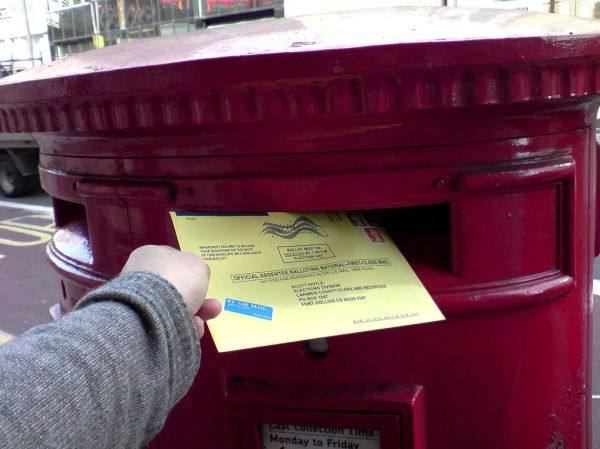
A ballot being dropped into a ballot box
knezovjb · CC BY-SA 2.0
Motion: This House would lower the voting age to 165 Pro · 5 Con · 30 sourcesEditor review: pending
Article Voting at 16: what changed in the countries that tried it · read it below ↓

Introduction

The voting age is the youngest age at which a citizen can vote. In the United States and most other democracies it is 18, and this debate asks whether 16- and 17-year-olds should get a vote too. The US set 18 as its national voting age with the 26th Amendment, certified on July 1, 1971, after decades of campaigning under the slogan “Old enough to fight, old enough to vote.”27

Some countries have gone further. Austria lowered its voting age to 16 for all elections in 2007.9 Malta followed in 2018, when its parliament voted 64 to 0 for the change.22 In Argentina, 16- and 17-year-olds have been able to vote since 2012, though, unlike adults, they are not required to.23 Brazil also makes voting optional at that age, and more than 2.1 million 16- and 17-year-olds registered for its 2022 election, up 51% from 2018.24 Germany let about 1.4 million 16- and 17-year-olds vote for the first time in the 2024 European Parliament election.21

The UK is now changing too. In Scotland's 2014 independence referendum, 109,593 16- and 17-year-olds registered, and 75% of those surveyed afterwards said they had voted.5 Scotland and Wales now let 16-year-olds vote in their own parliament and council elections.2 In July 2025 the UK government promised votes at 16 in all UK elections.1 Its bill, which would make about 1.7 million more young people eligible,3 passed the House of Commons by 411 votes to 102 in September 2026 and is now before the House of Lords.4

In the US, change has come only locally. In 2013, Takoma Park, Maryland, became the first American city to let 16- and 17-year-olds vote in its elections. That November, 44% of them voted, compared with 10% of all voters.10 A few other Maryland towns followed, as did Berkeley and Oakland, California, for some local or school board elections.10 In 2019, Representative Ayanna Pressley asked Congress to lower the voting age for federal elections, saying, “Our young people deserve to have the opportunity to exercise their right to vote.” Her amendment failed, 126 votes to 305.13

Public opinion leans against the idea. In a July 2025 YouGov poll, 57% of British adults said 16- and 17-year-olds should not be allowed to vote, against 32% who said they should.15 In Switzerland, 64.8% of voters in the canton of Zurich rejected votes at 16 in 2022,25 and Glarus is still the only one of the country's 26 cantons to allow it.26

The arguments fall along a few fault lines. Supporters point to studies from Austria showing that 16- and 17-year-olds turned out more often than 18- to 20-year-olds,8 and argue that a first vote cast while still at home and in school can start a lifelong habit. Opponents question whether teenagers are mature enough, and note that the law treats them as children in most other ways. As one British Conservative MP put it: “Isn't the Government's position on the age of majority just hopelessly confused?”30 There is also a suspicion that politicians back the idea because young people tend to vote for left-of-centre parties.212

Key terms

Enfranchisement
Giving a group of people the legal right to vote. Lowering the voting age would enfranchise 16- and 17-year-olds.
Suffrage
The right to vote in public elections. “Universal suffrage” means every adult citizen can vote.
Age of majority
The age at which the law treats someone as an adult, with full rights and responsibilities. In the US and UK it is usually 18.
Cognitive capacity
The ability to reason, remember and weigh information. Studies suggest it reaches adult levels around age 16.
Psychosocial maturity
Emotional and social self-control, such as resisting peer pressure and thinking about the future. It keeps developing into the early 20s.
Habitual voting
The idea that people who vote once are more likely to keep voting, so the first election someone takes part in shapes later behavior.
Devolved elections
In the UK, elections for the Scottish Parliament, the Welsh Senedd and local councils there, which those governments control themselves.
Compulsory voting
A rule that eligible citizens must vote, as in Brazil and Argentina from 18. In both, voting is optional for 16- and 17-year-olds.

Pros and cons at a glance

Pro: lower it to 16

    Con: keep it at 18

      Pro arguments

      Con arguments

      Key clashes

      Most voting age debates are won or lost on these four questions.

      1Are 16-year-olds mature enough to vote?

      Both sides use the same brain research and read it differently.

      Pro saysReasoning reaches adult levels by about 16, and voting is a slow, considered choice, not a snap decision.17
      Con saysSelf-control and resistance to pressure keep developing past 18, and Austrian data suggest young voters match their votes to their views less well.179

      2Should the voting age match the age of adulthood?

      A question of principle about where adulthood begins.

      Pro saysAge limits already differ for work, driving and buying tobacco. Each limit should fit the task, and 16-year-olds can already work unlimited hours.29
      Con saysAdulthood should come as one package. Letting 16-year-olds vote while banning them from buying a lottery ticket is confused.30

      3Does voting at 16 really raise turnout?

      The numbers look different depending on what you count.

      Pro says16- and 17-year-olds vote more often than 18- to 20-year-olds, and a first vote tends to become a habit.819
      Con saysMany never register, so turnout among all eligible teenagers can be very low.11

      4Who gains, and who should decide?

      Election rules only work if people trust why they were changed.

      Pro saysResearch finds no impact on election results where the age was lowered. This is about fairness, not party advantage.2
      Con saysThe parties pushing it expect young people's votes, and when the public is asked, it usually says no.326

      Around the world

      Europe: Austria (since 2007) and Malta (since 2018) let 16-year-olds vote in all elections.922 Germany lowered the age to 16 for the 2024 European Parliament election, though it stays 18 for its national parliament.21 In Switzerland, only the canton of Glarus allows it.26

      The United Kingdom: 16-year-olds already vote in Scottish and Welsh elections, and a bill to extend this to all UK elections is going through Parliament.24

      Latin America: Brazil and Argentina let 16- and 17-year-olds vote, but unlike older citizens they are not required to.2324

      The United States: the national voting age has been 18 since 1971.27 A handful of cities in Maryland and California let 16- and 17-year-olds vote in some local elections.10

      Debate tip: comparing countries is useful evidence on both sides. Pro can point to places where the change went smoothly; Con can point out that only a minority of democracies have made it, and that voters often reject it when asked.

      Discussion questions

      For class or club discussion. There are no right answers; ask for reasons and evidence.

      1. Should 16- and 17-year-olds be allowed to vote? Explain your answer using at least one argument from each side.
      2. What does someone need to be able to do to vote well? Is age the best way to measure it?
      3. Should the voting age be the same as the age for other adult rights, such as buying tobacco or serving in the military? Why or why not?
      4. If only a small share of eligible 16-year-olds registered to vote, would that be a reason to keep the reform or to drop it?
      5. Should a change like this be decided by lawmakers, or by a public vote of the people who can already vote?

      Article on this debate

      Politics and Government · By Debatery Editing Team

      Voting at 16: what changed in the countries that tried it

      Austria, Scotland and Brazil let 16-year-olds vote. A look at turnout, trust and what debaters get wrong.

      Read the article

      Sources

      1. UK Ministry of Housing, Communities and Local Government, “16 year olds to be given right to vote through seismic government election reforms,” GOV.UK, July 17, 2025. LinkGovernment press release
      2. Neil Johnston, “Voting age,” House of Commons Library research briefing, February 13, 2026. LinkParliamentary research
      3. House of Commons Library, “Representation of the People Bill 2024-26,” research briefing, 2026. LinkParliamentary research
      4. House of Commons Library, “Representation of the People Bill: progress of the bill,” research briefing, September 29, 2026. LinkParliamentary research
      5. The Electoral Commission, “Scottish Independence Referendum: Report on the referendum held on 18 September 2014,” December 2014. LinkElection regulator report
      6. John Curtice, “So How Many 16 and 17 Year Olds Voted?” What Scotland Thinks (ScotCen Social Research), December 16, 2014. LinkExpert analysis
      7. “Holyrood passes bill on votes at 16 for Scottish elections,” Scottish Legal News, June 19, 2015. LinkNews report
      8. Eva Zeglovits and Julian Aichholzer, “Are People More Inclined to Vote at 16 than at 18? Evidence for the First-Time Voting Boost Among 16- to 25-Year-Olds in Austria,” Journal of Elections, Public Opinion and Parties 24(3), 2014. LinkPeer-reviewed study
      9. Julian Aichholzer and Sylvia Kritzinger, “What happens when the voting age is lowered to 16? A decade of evidence from Austria,” Democratic Audit, February 26, 2020, summarising their chapter in Lowering the Voting Age to 16 (Palgrave Macmillan, 2020). LinkAcademic research summary
      10. Joshua A. Douglas, “The Case for the 16-Year-Old Vote,” Washington Monthly, August 25, 2022. LinkMagazine, opinion
      11. Generation Citizen, “Lowering the Voting Age for Local Elections in Takoma Park and Hyattsville, MD: A Case Study,” October 2016. LinkAdvocacy group report
      12. “A voice for the goose,” editorial, The Washington Times, May 21, 2013. LinkNewspaper editorial
      13. Peter Hasson, “125 Democrats and 1 Republican vote to lower voting age to 16,” The Daily Caller, March 8, 2019, reprinted by the office of Rep. Ted Lieu. LinkNews report
      14. Western New England University Polling Institute, survey of Massachusetts adults, April 9 to 27, 2019, published May 29, 2019. LinkUniversity poll
      15. YouGov, “Do you think 16 and 17 year olds should or should not be allowed to vote in UK elections?” survey of 5,538 GB adults, July 17, 2025. LinkOpinion poll
      16. Tak Wing Chan and Matthew Clayton, “Should the voting age be lowered to sixteen? Normative and empirical considerations,” Political Studies 54(3), 2006. LinkPeer-reviewed study
      17. Grace Icenogle, Laurence Steinberg and others, “Adolescents' Cognitive Capacity Reaches Adult Levels Prior to Their Psychosocial Maturity,” Law and Human Behavior 43(1), 2019. LinkPeer-reviewed study
      18. American Academy of Political and Social Science, interview with Daniel Hart on “American Sixteen- and Seventeen-Year-Olds Are Ready to Vote” (Hart and Atkins, The ANNALS, January 2011). LinkAcademic interview
      19. Abdul Latif Jameel Poverty Action Lab (J-PAL), “Voting and Habit Formation in the United States,” summary of Gerber, Green and Shachar, American Journal of Political Science, 2003. LinkResearch summary
      20. Government of Norway, Ministry of Local Government, “Reduced voting age trials.” LinkGovernment report
      21. The Federal Returning Officer (Germany), press release on the 2024 European Parliament election, 2024. LinkElection authority
      22. Massimo Costa, “Maltese parliament extends voting suffrage to 16-year-olds,” MaltaToday, March 5, 2018. LinkNews report
      23. “Argentina lowers voting age to 16,” Al Jazeera, November 1, 2012. LinkNews report
      24. Anna Pelegri (AFP), “Brazil's youngest voters betting on 76-year-old candidate,” International Business Times, September 30, 2022. LinkNews report
      25. “Youth suffrage proposal rejected by voters in Zurich,” Swissinfo, May 15, 2022. LinkNews report
      26. “Aargau voters clearly reject voting age 16,” Swissinfo, November 24, 2024. LinkNews report
      27. US National Archives, “Records of Rights Vote: ‘Old Enough to Fight, Old Enough to Vote’,” Pieces of History, November 13, 2013. LinkGovernment archive
      28. US Food and Drug Administration, “Tobacco 21.” LinkGovernment agency
      29. US Department of Labor, Wage and Hour Division, “Fact Sheet #43: Child Labor Provisions of the Fair Labor Standards Act (FLSA) for Nonagricultural Occupations,” revised December 2016. LinkGovernment agency
      30. PA News, “Votes at 16 policy ‘hopelessly confused’, claim Conservatives,” July 17, 2025. LinkNews agency report

      Arguments marked “Evidence needed” are waiting for a source before this guide goes live.

      You might also debate

      Practise this topic

      Suggest an argument or source

      Anyone can suggest improvements. An editor checks every suggestion and source before it's added, and you're credited by name.

      Mockup: suggestions aren't saved yet.