← All topics
Health and MedicineBeginner to AdvancedWSDCBPPublic Forum

Should sugary drinks be taxed?

Supporters say a tax cuts sugar and saves lives. Opponents say it hits poor families hardest and does little for health.
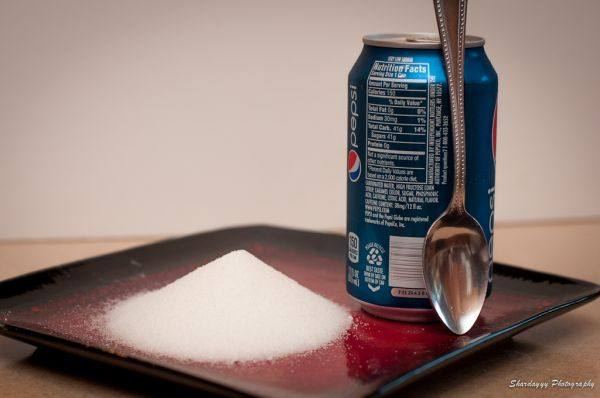
A pile of sugar on a plate next to a can of soda and a spoon
Shardayyy · CC BY 2.0
Motion: This House would tax sugary drinks5 Pro · 5 Con · 28 sourcesOctober 2026

Introduction

A sugary drinks tax, often called a soda tax or sugar tax, is an extra charge a government puts on drinks with added sugar, such as soda, sports drinks and energy drinks. Some taxes charge by volume, some by how much sugar a drink contains, and some take a share of the price. The aim is to make people buy fewer of them, and often to raise money too.

The idea is not new. Denmark taxed soft drinks from the 1930s until it scrapped the tax in 2014, partly because shoppers crossed the border for cheaper soda.20 The modern wave began in January 2014, when Mexico added a tax of 1 peso per litre, about 10% of the price.5

Today at least 116 countries tax sugary drinks in some way, but the World Health Organization (WHO) says the typical tax is “only about 2% of the price of a common sugary soda.”1 Saudi Arabia taxes sweetened soft drinks at 50% and energy drinks at 100%, while the UK charges 18p or 24p per litre depending on how much sugar a drink contains.148 WHO's Director-General, Tedros Adhanom Ghebreyesus, calls health taxes “one of the strongest tools we have for promoting health and preventing disease.”1

Why single out drinks? In the US, 63% of young people and 49% of adults drank a sugary drink on a given day in 2011 to 2014, and drinking them often is linked to obesity, type 2 diabetes, heart disease and tooth decay.3 A Harvard-led review of studies covering more than 300,000 people found that one to two sugary drinks a day went with a 26% higher risk of type 2 diabetes.4

The US has no national soda tax, so the fight happens city by city. Berkeley, California, voted for a tax of 1 cent per ounce in 2014, Philadelphia started charging 1.5 cents in 2017 and Seattle 1.75 cents in 2018.7613 Cook County, Illinois, which includes Chicago, voted to repeal its tax in October 2017, about two months after it began.17 California banned new local soda taxes for 12 years in 2018, and Washington voters passed a similar ban the same year after a campaign backed by Coca-Cola and PepsiCo spent about $20 million.1819

The evidence on buying habits is fairly clear. In Mexico, purchases of taxed drinks fell 6% in the first year.5 In Philadelphia, sales at chain stores fell 38%, though shopping just outside the city made up about a quarter of that.6 The evidence on health is less settled. Obesity among 10 and 11 year old girls in England was 8% lower than expected after the UK levy, but a 2025 study found no change in children's weight in Philadelphia.1025

The debate turns on three questions: does the tax make people healthier, who really pays, and should government use prices to steer what people drink? When Philadelphia was considering its tax, Senator Bernie Sanders called it “a regressive grocery tax that would disproportionately affect low-income and middle-class Americans.”21 Supporters reply that the families who pay most also have the most to gain.

Key terms

Sugar-sweetened beverage
Any drink with added sugar, such as soda, sports drinks, energy drinks and sweetened tea. Often shortened to SSB.
Excise tax
A tax on one particular product, such as tobacco, alcohol or soda, rather than on sales in general.
Tiered tax
A tax that rises with the amount of sugar in a drink, like the UK's levy, so low-sugar drinks pay less or nothing.
Regressive tax
A tax that takes a bigger share of income from poorer people than from richer people.
Pass-through
How much of a tax shops pass on to customers in higher prices, rather than absorbing it themselves.
Cross-border shopping
Buying goods just outside the area where a tax applies, to avoid paying it.
Reformulation
When companies change a product's recipe, for example cutting sugar so a drink falls into a lower tax band.
Preemption
When a higher level of government, such as a state, bans lower levels, such as cities, from passing certain laws or taxes.

Pros and cons at a glance

Pro: tax them

    Con: don't tax them

      Pro arguments

      Con arguments

      Key clashes

      Most sugary drinks tax debates are won or lost on these four questions.

      1Does the tax make people healthier?

      Everyone agrees sales fall. The fight is over what happens next.

      Pro saysEarly studies from England link the levy to fewer obese girls and fewer children having teeth pulled in hospital.1011
      Con saysThe same studies found no change for boys, and Philadelphia's tax was not linked to any change in children's weight.1025

      2Fairness: who really pays?

      Both sides say they are protecting low-income families.

      Pro saysPoorer households cut back the most, so they gain the most health benefit, and the money can fund services they use.515
      Con saysThe tax takes a bigger share of income from poorer families, whatever the money is later spent on.2122

      3Can people just avoid it?

      A tax only works if people cannot easily get around it.

      Pro saysEven counting shopping outside Philadelphia, sales still fell sharply, and a national tax leaves no border to cross.6
      Con saysShoppers drive to the next town, and Denmark scrapped its tax because so much buying moved across the border.20

      4Should government use prices to change what we eat?

      A question of principle about choice and responsibility.

      Pro saysGovernments already tax tobacco and alcohol to protect health, and sugar's costs fall on everyone through health care.1
      Con saysAdults should decide what they drink, and many voters have rejected these taxes when given the chance.1719

      Around the world

      Mexico: one of the first big national taxes, at 1 peso per litre since 2014.5

      The UK: a tiered levy on drink makers since April 2018, which pushed many companies to cut sugar.89

      South Africa: a levy linked to sugar content since 2018. Sugar bought from taxed drinks fell 51% per person per day after it began.12

      The Gulf: Saudi Arabia taxes sweetened soft drinks at 50% and energy drinks at 100%.14

      The US: no national tax. A handful of places, including Berkeley, Oakland, San Francisco, Philadelphia, Seattle, Boulder and the Navajo Nation, have their own.14

      The global picture: at least 116 countries tax sugary drinks, but most taxes are small, and drinks like 100% fruit juice usually escape.1

      Debate tip: comparing countries is useful evidence on both sides. Pro can point to Mexico, the UK and South Africa; Con can point to Denmark, which scrapped its tax, and to US voters who have blocked new ones.

      Discussion questions

      For class or club discussion. There are no right answers; ask for reasons and evidence.

      1. Should sugary drinks be taxed? Explain your answer using at least one argument from each side.
      2. Is a tax that falls hardest on poorer families acceptable if those families also gain the most health benefit?
      3. If a tax cuts sales but nobody's weight changes, has it worked? What should count as success?
      4. Should the money from a soda tax go to health programmes, to schools, or back to the people who paid it?
      5. Governments tax tobacco and alcohol. Is sugar similar enough to be treated the same way, or is that going too far?

      Sources

      1. World Health Organization, “Cheaper drinks will see a rise in noncommunicable diseases and injuries,” news release, January 13, 2026. LinkInternational body
      2. World Health Organization, “WHO urges global action to curtail consumption and health impacts of sugary drinks,” news release, October 11, 2016. LinkInternational body
      3. US Centers for Disease Control and Prevention, “Get the Facts: Sugar-Sweetened Beverages and Consumption.” LinkGovernment agency
      4. Harvard School of Public Health, “Consumption of sugary drinks increases risk of type 2 diabetes,” on Malik and Hu in Diabetes Care, as reported by ScienceDaily, October 28, 2010. LinkPeer-reviewed research, via university
      5. M. Arantxa Colchero, Barry M. Popkin, Juan A. Rivera and Shu Wen Ng, “Beverage purchases from stores in Mexico under the excise tax on sugar sweetened beverages: observational study,” BMJ, 2016. LinkPeer-reviewed research
      6. Wallace Stephens, “Sales of Sweetened Drinks Fell 38% After Philadelphia Beverage Tax,” AJMC, May 14, 2019, on Roberto et al. in JAMA. LinkPeer-reviewed research, via medical journal news
      7. NPR, “Berkeley's Soda Tax Appears To Cut Consumption Of Sugary Drinks,” via KQED, August 23, 2016. LinkNews report
      8. HM Treasury and HM Revenue & Customs, “Soft Drinks Industry Levy comes into effect,” GOV.UK, April 5, 2018. LinkGovernment announcement
      9. Public Health England, “Third year of industry progress to reduce sugar published,” GOV.UK, October 7, 2020. LinkGovernment report
      10. University of Cambridge, “Sugary drinks tax may have prevented over 5,000 cases of obesity a year in year six girls alone,” on Rogers et al. in PLOS Medicine, January 2023. LinkPeer-reviewed research, via university
      11. Nina Trivedy Rogers et al., “Estimated impact of the UK soft drinks industry levy on childhood hospital admissions for carious tooth extractions: interrupted time series analysis,” BMJ Nutrition, Prevention & Health, November 14, 2023. LinkPeer-reviewed research
      12. UNC Gillings School of Global Public Health, “South African beverage tax has reduced purchases of sugar-sweetened beverages,” on a study in The Lancet Planetary Health, April 8, 2021. LinkPeer-reviewed research, via university
      13. Public Health, Seattle & King County, University of Washington and Seattle Children's, “Evaluation of Seattle's Sweetened Beverage Tax: overview of results,” for the Seattle City Auditor. LinkGovernment evaluation
      14. Global Food Research Program, University of North Carolina, “Sugary drink taxes around the world,” map, November 2023. LinkUniversity research group
      15. City of Philadelphia, “Philly Beverage Tax: where the money goes,” April 3, 2017. LinkCity government
      16. City of Philadelphia, “Researchers publish study on unemployment claims one year after implementation of Philadelphia's sweetened beverage tax,” April 9, 2019. LinkCity government, on peer-reviewed study
      17. “Chicago Just Repealed Its Brand New Soda Tax,” Stateline (Pew Charitable Trusts), October 12, 2017. LinkNews report
      18. Associated Press, “California blocks local soda taxes until 2031,” ABC7, June 29, 2018. LinkNews report
      19. “Washington Voters Approve Ban on Local Soda and Grocery Taxes,” Route Fifty, November 2018. LinkNews report
      20. “Denmark to scrap decades-old soft drink tax,” FoodNavigator, April 25, 2013. LinkTrade press report
      21. Justin Ross and Felipe Lozano-Rojas, “Are Sugar-Sweetened Beverage Taxes Regressive? Evidence from Household Retail Purchases,” Tax Foundation, June 19, 2018. LinkTax policy think tank
      22. Tax Foundation, “The Case Against Soda Taxes,” March 15, 2017. LinkTax policy think tank, own position
      23. “Pepsi cutting 80 to 100 Philadelphia-area jobs, blames beverage tax,” 6abc Action News, March 1, 2017. LinkNews report
      24. “Beverage industry to fight back against Philadelphia's new soda tax,” FoodNavigator, June 22, 2016, quoting the American Beverage Association. LinkTrade press, industry position
      25. PolicyLab, Children's Hospital of Philadelphia, “The Philadelphia Beverage Tax and Pediatric Weight Outcomes,” on a study in JAMA Pediatrics, 2025. LinkPeer-reviewed research, via hospital
      26. “Boris Johnson to review ‘sin taxes’ to see if they unfairly target low income families,” ITV News, July 3, 2019. LinkNews report
      27. Julia Terruso, “City soda tax revenue to fall short,” The Philadelphia Inquirer, June 13, 2017. LinkNews report
      28. “Philly's soda tax may have slowed obesity rate, Penn study finds,” PhillyVoice, November 4, 2024, on a study in The Lancet Regional Health. LinkNews report

      Arguments marked “Evidence needed” are waiting for a source before this guide goes live.

      You might also debate

      Practise this topic

      Suggest an argument or source

      Anyone can suggest improvements. An editor checks every suggestion and source before it's added, and you're credited by name.

      Mockup: suggestions aren't saved yet.