
1Do bans actually reduce plastic pollution?
Both sides can point to real results.
Supporters say throwaway plastic is filling oceans and harming wildlife faster than recycling can cope. Opponents say bans swap one problem for another and miss the real sources of pollution.
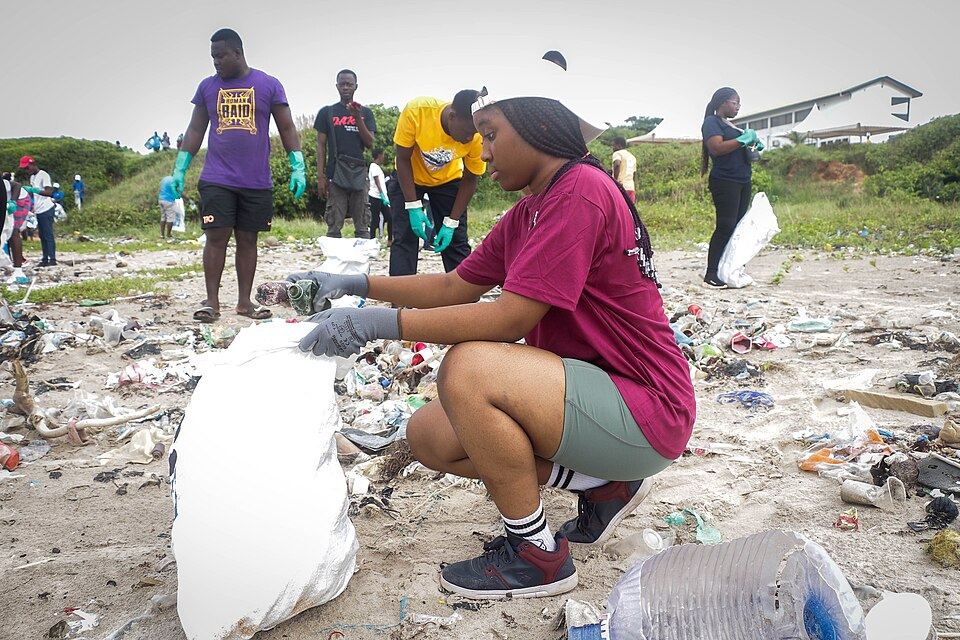
Single-use plastics are products made to be used once and then thrown away, such as shopping bags, straws, cutlery, cups, takeout containers and a lot of food packaging. Nearly two-thirds of the world's plastic waste comes from plastic items that last less than five years.2 The debate is about whether governments should ban these items outright, or deal with the waste in other ways.
Bans are not new. Bangladesh banned thin polythene bags nationwide in January 2002, one of the first countries to do so.20 The same year, Ireland tried a different tool: a charge of 15 cents per bag, which cut use from an estimated 328 bags per person a year to 21 by the end of 2002.17
The amount of waste keeps growing. The world produced 353 million tonnes of plastic waste in 2019, more than double the amount in 2000. Only 9% was recycled, while 22% was dumped, burned in the open or leaked into the environment.1 In the United States, people threw out 35.7 million tons of plastic in 2018, and just 8.7% was recycled.3
Laws are spreading fast. By 2018, 66% of countries had some kind of law on plastic bags.4 Kenya brought in what Reuters called the world's toughest law in 2017: up to four years in prison or fines of $40,000 for producing, selling or even using a plastic bag.5 Since July 2021, the European Union has banned some single-use plastic items, such as polystyrene cups and food containers,7 and India banned 19 single-use items in July 2022.23 In Canada, a ban on six items is still being fought in court: on October 15, 2026, the Supreme Court of Canada agreed to hear the plastics industry's appeal.24
The United States has no national ban, so states and cities decide. California banned thin plastic grocery bags in 2014, but stores switched to thicker plastic bags, and bag waste grew by 47% to 231,072 tons by 2022. A tougher law took effect on January 1, 2026.9 Federal policy has swung both ways. In 2022 the Interior Department ordered single-use plastics phased out on its lands, including national parks, by 2032.26 In 2025 President Trump signed an order ending federal purchases of paper straws, which it called “nonfunctional.”25
Countries cannot agree on a global answer either. In August 2025, talks on a UN plastics treaty in Geneva ended with no deal after 184 countries split over whether to limit how much plastic is made.19 “To be very clear, a compromise means that we have to bend our red lines,” said Denmark's environment minister, Magnus Heunicke.19
The big fault lines are practical. A 2025 study in Science found that US bag bans and fees cut plastic bags' share of shoreline litter by 25 to 47%.22 But Denmark's environment agency calculated that a cotton tote must be reused 7,100 times to match a standard plastic carrier bag across every environmental measure.11 Both sides agree plastic pollution is a problem. They disagree about whether bans are the best fix.
Most single-use plastics debates are won or lost on these four questions.
Both sides can point to real results.
A question about the whole life of a product, not just where it ends up.
The answer decides whether a ban in one country matters.
Even people who want less plastic disagree about the tool.
The US: there is no national ban. States such as California set their own rules, and federal policy has changed with each administration, from a 2022 plan to phase out single-use plastics on public lands to a 2025 order backing plastic straws.92625
Europe: the EU has banned a list of single-use items, such as polystyrene cups and food containers, where affordable alternatives exist.7 England and Ireland rely mostly on bag charges.1617
Asia and Africa: Bangladesh, Kenya and India have all passed bans, but enforcing them has been hard, especially among small traders.20623
Canada: a ban on six items, including straws, cutlery and six-pack rings, is now headed to the Supreme Court of Canada.24
The global treaty: 184 countries failed to agree on a UN plastics treaty in 2025, split between limiting production and focusing on waste.19
Debate tip: comparing countries is useful evidence on both sides. Pro can point to places where bans cut litter; Con can point to places where bans were ignored or rolled back.
For class or club discussion. There are no right answers; ask for reasons and evidence.
Arguments marked “Evidence needed” are waiting for a source before this guide goes live.
Anyone can suggest improvements. An editor checks every suggestion and source before it's added, and you're credited by name.