← All topics
EducationBeginner to AdvancedWSDCBPPublic Forum

Should school start later in the morning?

Supporters say teenagers' body clocks are set late and early bells cost them sleep. Opponents point to buses, budgets and family routines.
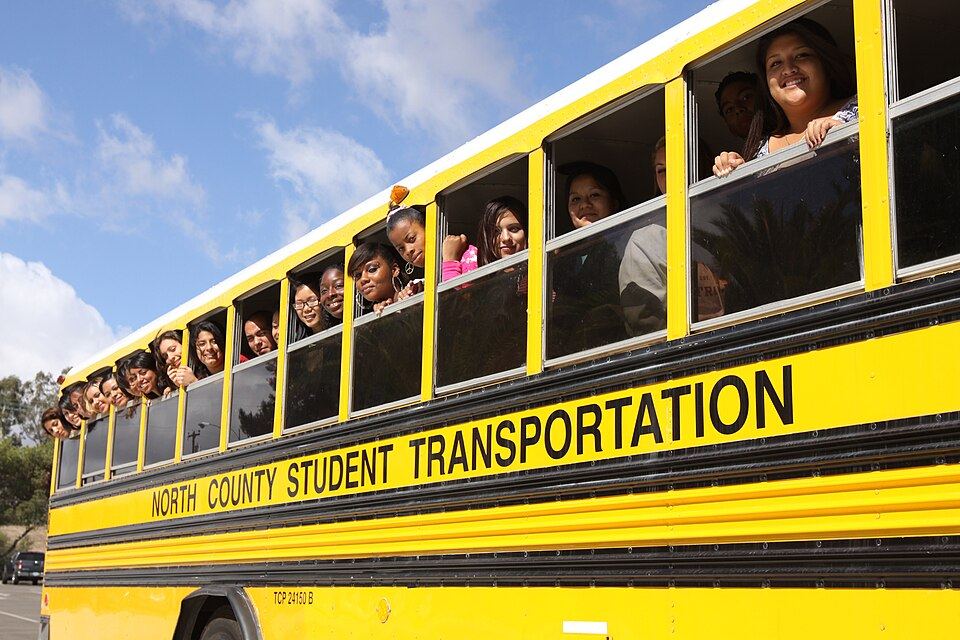
Students smiling out of the windows of a yellow school bus
US Marine Corps · Public domain
Motion: This House would start the school day later for teenagers5 Pro · 5 Con · 28 sourcesOctober 2026

Introduction

A later school start means moving the first bell of the day later in the morning, usually for middle and high school students. Most proposals aim for 8:30 a.m. or later, so that teenagers can sleep closer to the hours their bodies need. The debate sets student health against the cost and daily routines of whole communities.

The idea is not new. In 1996 the school district in Edina, Minnesota, moved its high school start from 7:25 a.m. to 8:30 a.m., one of the first districts to try it.27 In 2014 the American Academy of Pediatrics said middle and high schools should start at 8:30 a.m. or later.2 The American Academy of Sleep Medicine explains why: “During adolescence, internal circadian rhythms and biological sleep drive change to result in later sleep and wake times.”3

Yet most American schools still start early. A CDC study of about 39,700 public middle and high schools in the 2011–12 school year found an average start time of 8:03 a.m., and only 17.7% started at 8:30 or later.1 In 2023, 77% of US high school students said they slept less than the recommended eight to 10 hours a night, up from 69% in 2007.4

The best-known test came in Seattle. In 2016 the city moved its high schools from 7:50 a.m. to 8:45 a.m. Researchers at the University of Washington found that students slept a median of 34 minutes more each night, and final grades in one biology course were 4.5% higher.5 Biologist Horacio de la Iglesia said, “To ask a teen to be up and alert at 7:30 a.m. is like asking an adult to be active and alert at 5:30 a.m.”5

Some states have stepped in. California’s SB 328, signed in 2019, has required most high schools to start no earlier than 8:30 a.m. and middle schools no earlier than 8 a.m. since 2022, though rural districts are exempt.109 Florida passed a similar law in 2023, but in 2025 lawmakers unanimously voted to undo it before it took effect, after districts warned they would need more buses and hard-to-find drivers.1211

The fault lines are clear. Supporters point to research linking later starts with more sleep, better grades and fewer teen car crashes.67 Opponents point to cost and disruption: in 2014 Fairfax County, Virginia, put the cost of moving its high school start from 7:20 a.m. to about 8 a.m. at roughly $5 million, mainly for dozens of extra buses.14 Families are split too. In a 2017 national poll of parents whose teens started school before 8:30, just 51% supported a later start.17

The question reaches well beyond the US. In England, an Oxford University trial hoped to recruit 100 state secondary schools to test a 10 a.m. start, but only two volunteered.24 In Singapore, a girls’ secondary school moved its start from 7:30 a.m. to 8:15 a.m. in 2016, and its students still reported less sleepiness nine months later.25

Key terms

Circadian rhythm
The body’s internal 24-hour clock, which controls when we feel sleepy and when we feel alert.
Sleep phase delay
The shift during puberty that makes teenagers fall asleep and wake up later than younger children and adults.
Sleep deprivation
Regularly getting less sleep than the body needs. For teenagers, that usually means fewer than eight hours a night.
Social jet lag
The gap between when people sleep on school or work days and on free days, such as teenagers sleeping in much later at weekends.
Tiered busing
Using the same buses and drivers for several runs each morning, with schools starting at staggered times. It is the main reason start times are hard to change.
Zero period
An optional class held before the official start of the school day. California’s law still allows these.
Randomised controlled trial
A study that assigns people or schools to a change or no change by chance, so researchers can be more confident the change caused any difference.
Cost-benefit analysis
Adding up the expected gains and costs of a policy in the same units, usually money, to see whether it is worth it.

Pros and cons at a glance

Pro: start later

    Con: keep current times

      Pro arguments

      Con arguments

      Key clashes

      Most debates about school start times are won or lost on these four questions.

      1Biology or habits: why are teenagers so tired?

      If the cause is biology, the timetable should change. If it is habits, the teenagers should.

      Pro saysPuberty moves the body clock later. Early bells force teens to wake in the middle of their biological night.3
      Con saysEvening light and late-night phone use push body clocks later. Fix those, or a later bell will simply be followed by later bedtimes.2223

      2Is the evidence strong enough to act on?

      Both sides agree there are few randomised trials. They disagree about what that means.

      Pro saysMany real changes, from Seattle to Kentucky to Singapore, point the same way: more sleep, better grades and fewer crashes.5725
      Con saysA Cochrane review rated the certainty of the evidence as very low. Big, costly changes need stronger proof.21

      3Is it worth the cost?

      Buses and drivers are the biggest price tag.

      Pro saysRAND estimated an $83 billion gain to the US economy within ten years, and Montgomery County made a smaller change with no net cost.816
      Con saysDistricts pay the bills today. Florida’s warned they would need more buses and drivers who are hard to find.1412

      4Whose schedule should come first?

      A school timetable shapes the day for students, younger siblings, parents, coaches and employers.

      Pro saysTeenagers’ health and safety matter more than the convenience of adult schedules.
      Con saysYounger children, working parents, athletes and students with jobs all lose out when the high school day shifts.1119

      Around the world

      The US: California is the only state with a statewide start-time mandate. Florida passed one in 2023 but let districts opt out in 2025 before it took effect.912

      England: Oxford’s Teensleep study planned to test a 10 a.m. start in 100 state secondary schools, but only two volunteered.24

      Singapore: a girls’ secondary school moved its start from 7:30 a.m. to 8:15 a.m. in 2016. Students went to bed about 9 minutes later but woke about 32 minutes later.25

      Germany: a high school in Alsdorf let older students choose each day whether to come to the 8 a.m. class or arrive an hour later. On late days they slept more than an hour longer, though their overall sleep did not increase significantly.26

      Debate tip: foreign examples cut both ways. Pro can show that later starts work in very different school systems; Con can point out how few schools have been willing to try them.

      Discussion questions

      For class or club discussion. There are no right answers; ask for reasons and evidence.

      1. Should school start later in the morning? Explain your answer using at least one argument from each side.
      2. Are teenagers tired mainly because of biology, or because of habits like late-night phone use? What evidence would settle it?
      3. If a later start helps high school students but means younger children start earlier, is that a fair trade?
      4. Should start times be decided by the state, by each school district, or by each school?
      5. Would letting students choose between an early and a late start, as one German school did, be a good middle path?

      Sources

      1. Anne G. Wheaton, Gabrielle A. Ferro and Janet B. Croft, “School Start Times for Middle School and High School Students, United States, 2011–12 School Year,” Morbidity and Mortality Weekly Report, Centers for Disease Control and Prevention, August 7, 2015. LinkGovernment report
      2. “Pediatricians Call for Later School Start Times to Combat Sleep Deprivation,” Education Week, August 2014, on the American Academy of Pediatrics policy statement. LinkNews report
      3. American Academy of Sleep Medicine, position statement on delaying middle school and high school start times, Journal of Clinical Sleep Medicine 13(4), 2017. LinkMedical society statement
      4. Aimee Cunningham, “A rising percentage of U.S. teens aren’t getting enough sleep,” Science News, March 2, 2026, on a study in JAMA. LinkScience journalism
      5. University of Washington News, news release on the Seattle school start times study by Gideon Dunster, Horacio de la Iglesia and colleagues in Science Advances, December 12, 2018. LinkUniversity research
      6. University of Minnesota, “Late start times benefit high school students,” news release on research led by Kyla Wahlstrom, May 20, 2016. LinkUniversity research
      7. American Academy of Sleep Medicine, “Later school start times may improve the sleep of adolescents and decrease their risk of motor vehicle accidents,” on Danner and Phillips, Journal of Clinical Sleep Medicine, December 2008. LinkPeer-reviewed study, via medical society
      8. RAND Europe, “Economic benefits of later school start times,” Marco Hafner, Martin Stepanek and Wendy M. Troxel, 2017. LinkResearch organisation
      9. Vani Sanganeria, “Do later school start times help California students? Here’s what new study says,” EdSource, September 2, 2026, on a National Bureau of Economic Research working paper. LinkNews report
      10. “New California law requires later start times for middle schools, high schools,” Scripps National News via WCPO, October 14, 2019. LinkNews report
      11. “Governor signs repeal of later school start times,” Florida Politics, 2025. LinkNews report
      12. News Service of Florida, “DeSantis signs school start times bill,” 2025. LinkNews report
      13. “Legislature votes to repeal later school start times,” Jax Today, April 30, 2025. LinkNews report
      14. “Virginia District’s Plan to Start School Later Will Cost $5 Million,” Education Week, October 24, 2014. LinkNews report
      15. Allie Gross, “Later start times on the table for Maryland district,” K-12 Dive, January 9, 2015. LinkNews report
      16. “School Will Start Later in Montgomery County Next Year,” Montgomery Community Media, February 10, 2015. LinkLocal news report
      17. Michigan Medicine, “Despite Health and Learning Benefits, Half of Parents Against Later School Start Times,” C.S. Mott Children’s Hospital National Poll on Children’s Health, August 18, 2017. LinkNational poll
      18. Colleen Shaddox, “Delaying School Start Times Causes Alarm,” Pacific Standard, October 25, 2010. LinkMagazine report
      19. Nate Perry, “Later Class Times Present Challenges for Activities Schedules,” National Federation of State High School Associations, April 14, 2020. LinkSchool sports body
      20. “The educational effects of school start times,” IZA World of Labor, Institute of Labor Economics. LinkResearch review
      21. “Later school start times for supporting the education, health, and well-being of high school students,” Cochrane Database of Systematic Reviews, CD009467 (review searched to May 2017). LinkSystematic review
      22. “Later school start time ‘not the solution’ for tired teens,” Tes, March 28, 2017, on Skeldon et al., Scientific Reports. LinkNews report
      23. “Teens spend nearly an hour on phones in late-night hours before school, study finds,” FOX 13, May 19, 2026, on a study in JAMA Pediatrics. LinkNews report
      24. G. Illingworth, R. Sharman, A. Jowett, C. Harvey, R. Foster and C. Espie, “Challenges in implementing and assessing outcomes of school start time change in the UK: experience of the Oxford Teensleep study,” Sleep Medicine 60, 2018. LinkPeer-reviewed study
      25. ScienceDaily, news release from Oxford University Press USA on Lo et al., “Sustained benefits of delaying school start time on adolescent sleep and well-being,” Sleep, April 10, 2018. LinkPeer-reviewed study, via science news
      26. Ludwig Maximilian University of Munich, “We’ll be in later,” press release on Winnebeck, Roenneberg et al., Sleep, December 19, 2019. LinkUniversity research
      27. Andrea Fine, “Early to rise makes teens ... less attentive?” The Christian Science Monitor, April 20, 1999. LinkNews report
      28. Centers for Disease Control and Prevention, “FastStats: Sleep in High School Students,” Youth Risk Behavior Survey data, 2021. LinkGovernment data

      Arguments marked “Evidence needed” are waiting for a source before this guide goes live.

      You might also debate

      Practise this topic

      Suggest an argument or source

      Anyone can suggest improvements. An editor checks every suggestion and source before it's added, and you're credited by name.

      Mockup: suggestions aren't saved yet.