← All topics
EducationBeginner to AdvancedWSDCBPPublic Forum

Should private tutoring academies (hagwons) face a nighttime curfew?

Supporters say a cutoff protects students' sleep and stops a spending race. Opponents say it just pushes late-night study out of sight.
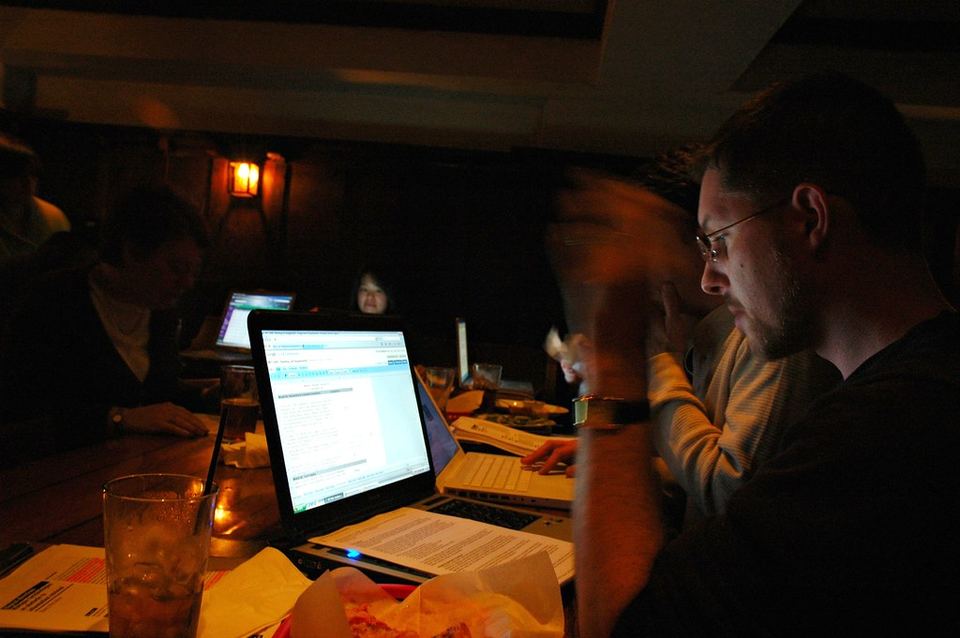
A student studying late with books and a laptop
Wonderlane · CC0 1.0
Motion: This House would impose a nighttime curfew on private tutoring academies5 Pro · 5 Con · 30 sourcesOctober 2026

Introduction

Hagwons are private tutoring academies where many South Korean children study after school, from math and English to exam preparation. To limit late-night cramming, Seoul allows hagwons to operate only from 5 a.m. to 10 p.m.4 Each city and province sets its own hours by local ordinance, so the cutoff for high school students ranges from 10 p.m. in Seoul to 11 p.m. in Busan and Incheon and midnight in Daejeon, Ulsan and Jeju.13

Korea has argued about controlling tutoring for decades. Chun Doo Hwan banned private teaching almost immediately after taking power in 1980, but in 2000 the Constitutional Court struck the ban down because it “infringes upon the basic rights of the people to educate their children.”11 Curfews came next. When Seoul's council tried to scrap time limits in 2008, protests from parents and civic groups forced it to back down, and in October 2009 the court upheld hagwon curfews.261

The stakes are huge. Spending on private education for school students hit a record 29.2 trillion won (about $20 billion) in 2024, when 80% of students took part.5 It fell to 27.5 trillion won in 2025 as student numbers shrank, but families who paid still spent a record 604,000 won a month per child. Households earning at least 8 million won a month spent about 3.4 times as much as those earning under 3 million.6

Supporters of the curfew point to sleep. In a 2024 National Youth Policy Institute survey of 2,258 high school students, 46.7% slept less than six hours a night, and private academies and tutoring were the second most common reason given.8 Teenagers elsewhere are tired too: in 2021, between 71% and 84% of US high school students, depending on the state, did not get the recommended eight hours.21

Critics say the rule is widely broken. Seoul caught 174 hagwons breaking time limits in 2023, more than three times the 49 cases in 2020. A teacher in Daechi-dong, Seoul's best-known hagwon district, told the Korea JoongAng Daily: “Although it's labeled as 'independent study,' instructors stay until 2 a.m. to supervise them.”12 A 2015 study found that tighter curfews “did not generate a significant reduction in the hours and resources spent on private tutoring.”9

In late 2025 the fight returned. Seoul councilor Jung Ji-woong proposed letting hagwons teach high school students until midnight, saying, “I agree with the idea that we should cut down on private education, but we must give students the freedom of choice.”34 A coalition of 119 civic groups protested, and the Ministry of Education said the 10 p.m. limits “should be maintained.”4

Other countries face the same pressure. China went much further in 2021, banning for-profit tutoring in core school subjects and ordering online classes to end by 9 p.m.1517 The debate turns on three questions: whose job it is to protect children's rest, whether a curfew actually reduces late-night study, and who wins or loses when the rules change.

Key terms

Hagwon
A private after-school academy in South Korea that teaches school subjects such as math and English or prepares students for exams.
Curfew
Here, a limit on the latest time hagwons may teach students, such as 10 p.m. in Seoul.
Ordinance
A law made by a city or province rather than the national government. Korea's hagwon hours are set this way.
Shadow education
Paid tutoring outside school that follows the school curriculum, like a shadow of the school day.
Private education spending
What families pay for tutoring and academies. Korea's government surveys it every year.
Hagparazzi
Slang for people who report illegal hagwon activity, such as teaching past the curfew, in return for government cash rewards.
Suneung
South Korea's national college entrance exam. Much of the demand for tutoring is driven by it.
Double reduction
China's 2021 policy to cut both homework and off-campus tutoring for children in compulsory education.

Pros and cons at a glance

Pro: impose a curfew

    Con: no curfew

      Pro arguments

      Con arguments

      Key clashes

      Most hagwon curfew debates are won or lost on these four questions.

      1Health or freedom: who decides when a teenager stops studying?

      A question of values about families and the state.

      Pro saysChildren cannot set their own limits against parents and academies, and nearly half of Korean high school students sleep under six hours.8
      Con saysFamilies, not the state, should decide. Korea's top court struck down a tutoring ban in 2000 for exactly this reason.11

      2Does a curfew actually reduce studying?

      Both sides use Korean research and read it differently.

      Pro saysWhen regions cut late-night hagwon hours, high school students appear to have slept more and weighed less.10
      Con saysTighter curfews did not significantly cut total tutoring hours or spending. Study just moved elsewhere.9

      3Fairness: who gains and who loses?

      Both sides claim to speak for poorer families.

      Pro saysWithout limits, richer families buy ever more hours and widen a gap that is already more than three to one.6
      Con saysRich families switch to private tutors at home. Poorer students who rely on cheaper group classes are the ones squeezed.9

      4Fix the symptom or the cause?

      Both sides see exam pressure as a root problem. They disagree about what to do meanwhile.

      Pro saysReforming exams and admissions takes years. A curfew protects students who are exhausted right now.
      Con saysAs long as exams decide futures, demand will find a way around any curfew, so effort should go into reform.23

      Around the world

      South Korea: each region sets its own limit. High school students must stop at 10 p.m. in Seoul, 11 p.m. in Incheon, Busan and North Jeolla, and midnight in Daejeon, Ulsan and Jeju.3

      China: the 2021 “double reduction” rules required tutoring firms for compulsory-education subjects to become nonprofits and banned off-campus tutoring on weekends, public holidays and school vacations.16 The after-school tutoring market had been worth an estimated 800 billion yuan in 2019.30 Jiangsu province cut its tutoring firms from nearly 9,000 to 205 in two years.17

      Japan: cram schools called juku are a fixture of education. In 2002 national statistics suggested more than 70% of schoolchildren sought private tutoring before high school, and some came home around 8:30 p.m.18 A 2021 government survey found that rising cram school spending pushed education costs to a record high.19

      The US: the debate over teenage sleep has focused on school start times. Since a 2019 law, California high schools may start no earlier than 8:30 a.m.20

      Debate tip: comparing countries is useful evidence on both sides. Pro can show that many governments already limit study time; Con can point to China, where a much stricter ban pushed tutoring underground.

      Discussion questions

      For class or club discussion. There are no right answers; ask for reasons and evidence.

      1. Should private tutoring academies face a nighttime curfew? Explain your answer using at least one argument from each side.
      2. Is it the government's job to decide how much a teenager studies, or only how much they work for pay?
      3. If a curfew is often broken, does that prove it has failed, or only that it needs better enforcement?
      4. Should a curfew apply only to hagwons, or also to private tutors, online classes and study cafes? Where would you draw the line?
      5. Would changing how universities choose students do more to reduce late-night study than any curfew? Why or why not?

      Sources

      1. Kang Shin-who, “Hagwon Curfew Ruled Constitutional,” The Korea Times, October 29, 2009. LinkNews report
      2. Cho Jung-woo, “Ordinance to extend hagwon hours in Seoul sparks debate over regulating cram schools,” Korea JoongAng Daily, December 17, 2025. LinkNews report
      3. Kim Min-sang and Lee Bo-ram, “Bill to let Seoul-based cram schools stay open late sparks 'fairness' debate,” Korea JoongAng Daily, November 6, 2025. LinkNews report
      4. Lee Seung-ku, “From student rights to midnight classes, education new political battlefield in Seoul,” The Korea Herald, via Asia News Network, November 19, 2025. LinkNews report
      5. Yi Whan-woo, “Private education spending hits all-time high despite falling number of students,” The Korea Times, March 13, 2025 (Statistics Korea and Ministry of Education survey). LinkGovernment data, via news report
      6. Kim Min-sang, Lee Bo-ram and Kim Kyung-hee, “Private education spending for grade school students hits record high in 2025,” Korea JoongAng Daily, March 12, 2026. LinkGovernment data, via news report
      7. Yonhap, “Spending on private education jumps 60% over past decade: data,” The Korea Times, January 4, 2026. LinkNews report
      8. Hankook Ilbo, “Half of South Korean high schoolers get less than 6 hours of sleep a day,” The Korea Times, January 8, 2026 (National Youth Policy Institute survey). LinkGovernment research, via news report
      9. Hoon Choi and Álvaro Choi, “When One Door Closes: The Impact of the Hagwon Curfew on the Consumption of Private Tutoring in the Republic of Korea,” IEB Working Paper 2015/32, University of Barcelona, 2015. LinkResearch paper
      10. Young Kyung Do, “The Effect of Sleep Duration on Body Weight in Adolescents: Evidence from a Natural Experiment,” American Society of Health Economists conference, 2014. LinkResearch paper
      11. Casey J. Lartigue Jr., “You'll Never Guess What South Korea Frowns Upon,” The Washington Post, May 28, 2000, republished by the Cato Institute. LinkOpinion
      12. Woo Ji-won and Seo Ji-won, “Cram or crime? Demand for illegal late-night hagwon classes persists despite gov't crackdowns,” Korea JoongAng Daily, August 23, 2024. LinkNews report
      13. Nam Hyung-suk, “Hagwon whistleblowers get big bucks for snooping,” Korea JoongAng Daily, July 18, 2011. LinkNews report
      14. Kang Shin-who, “Tipsters on Illegal Hagwon to Get Up to W2 Mil. Reward,” The Korea Times, July 6, 2009. LinkNews report
      15. Xinhua, “China issues guidelines to ease burden on young students,” published by the State Council of the People's Republic of China, July 24, 2021. LinkGovernment policy
      16. New Zealand Ministry of Foreign Affairs and Trade, “China launches education industry reforms,” market report, November 2021. LinkGovernment report
      17. Bloomberg News, “China's $100 Billion Tutoring Ban Backfires, Spawning Black Market,” via BNN Bloomberg, July 20, 2023. LinkNews report
      18. Kathleen Kennedy Manzo, “Japanese Schoolchildren Cram to Boost Achievement,” Education Week, August 7, 2002. LinkNews report
      19. Nippon.com, “Public and Private Education Costs in Japan Soar to New Highs” (Ministry of Education survey, 2021). LinkGovernment data, via news site
      20. Ali Martin, “New California law: Let teens sleep in on school days,” The Christian Science Monitor, August 17, 2022. LinkNews report
      21. US Centers for Disease Control and Prevention, “FastStats: Sleep in High School Students.” LinkGovernment data
      22. Kim Won, “Fierce competition, anxiety over schooling may have cost Korea a quarter of its births,” Korea JoongAng Daily, September 3, 2026. LinkResearch, via news report
      23. Bae Ji-sook, “Will Hagwon Curfew Work?” The Korea Times, April 26, 2009. LinkNews report
      24. Kim Dan-sung, “Hagwon, students skirt new rule,” Korea JoongAng Daily, August 22, 2009. LinkNews report
      25. Editorial, “Late night rights,” Korea JoongAng Daily, March 13, 2008. LinkEditorial
      26. Kim Tae-jong, “Seoul City Council Cancels All-Night Hagwon Plan,” The Korea Times, March 18, 2008. LinkNews report
      27. “The Effect of Private Tutoring Expenditures on Academic Performance: Evidence from Middle School Students in South Korea,” KDI Journal of Economic Policy, June 2012. LinkPeer-reviewed research
      28. Choi Jeong-yoon, “Private education spending hits record high in South Korea despite fall in student numbers,” The Korea Herald, via Asia News Network, March 14, 2025. LinkNews report
      29. United Nations Office at Geneva, “Experts of the Committee on the Rights of the Child discuss the protection of rights in schools with the Republic of Korea,” meeting summary, September 2019. LinkUN meeting summary
      30. CNBC, “China's harsh education crackdown sends parents, businesses scrambling,” August 5, 2021. LinkNews report

      Arguments marked “Evidence needed” are waiting for a source before this guide goes live.

      You might also debate

      Practise this topic

      Suggest an argument or source

      Anyone can suggest improvements. An editor checks every suggestion and source before it's added, and you're credited by name.

      Mockup: suggestions aren't saved yet.