← All topics
Health and MedicineBeginner to AdvancedWSDCBPPublic Forum

Should parents be allowed to choose their baby's genes?

Supporters see a way to end inherited disease. Opponents fear unsafe experiments, false promises and a new kind of inequality.
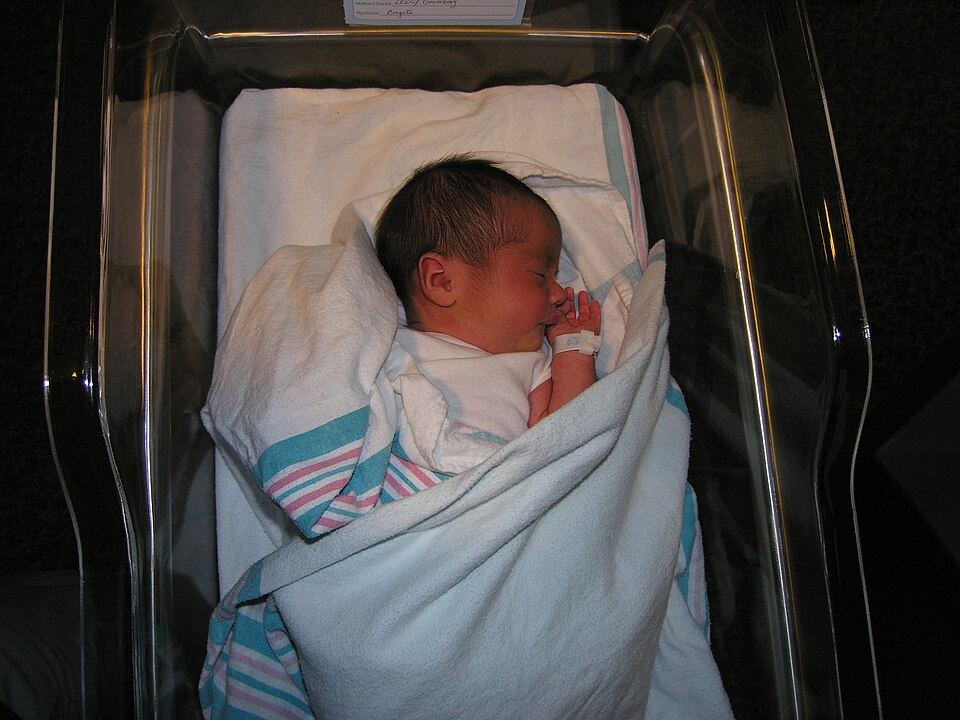
A newborn baby in a hospital
Bonnie U. Gruenberg · CC BY-SA 3.0
Motion: This House would allow parents to select the genes of their children5 Pro · 5 Con · 26 sourcesEditor review: pending

Introduction

Choosing a baby's genes means using medical technology to influence which genetic traits a child is born with. Today this mostly happens through in vitro fertilization (IVF): doctors create several embryos in a lab, test a few cells from each, and the parents decide which embryo to transfer. A more radical option, gene editing, would change an embryo's DNA directly. Critics call the results “designer babies.”

Testing embryos has existed in some form since the 1990s.2 One famous early case came in 2000, when Adam Nash was born from an embryo chosen to be free of his sister Molly's deadly blood disorder and to be a matching donor for her transplant.8

The practice is now common. In 2022, US clinics performed 435,426 IVF cycles, and babies born through fertility treatment made up about 2.6% of all US births.1 One study found that embryo testing doubled from 17% of US IVF cycles in 2014 to 34% in 2016, while cycles used to pick a baby's sex for non-medical reasons rose from 1,314 to 2,184.3 Newer “polygenic” tests, which rank embryos by their risk of common diseases and even by traits, are offered at more than 100 US fertility clinics and can cost up to $50,000.2

Editing embryos is far more controversial. Chinese scientist He Jiankui edited the embryos of twin girls, born in late 2018, to try to make them resistant to HIV.19 In 2019 a court in Shenzhen sentenced him to three years in prison, saying he had “deliberately violated the relevant national regulations on scientific research and medical management.”4 In 2023 the organisers of an international summit of scientists declared: “Heritable human genome editing remains unacceptable at this time.”5

The public is divided. In a 2022 Pew Research Center survey, 30% of Americans said editing a baby's genes to reduce the risk of a serious disease would be a good idea for society, 30% said it would be a bad idea and 39% were not sure. Yet 74% opposed editing genes to make a baby more attractive.6 Another survey, published in 2023, found that 38% of Americans would probably screen embryos to boost a child's education prospects.7

Rules vary widely. The UK licenses mitochondrial donation, which had led to the births of eight babies by 2025, but it bans choosing a baby's sex for non-medical reasons.925 In the US, the main fertility doctors' body leaves it to each clinic to decide whether to offer sex selection,14 while since 2015 Congress has used budget laws to block the FDA from reviewing applications to create babies from edited embryos.26

The debate turns on a few big questions. Supporters say these tools can end inherited disease and that parents should be free to give their children the best start. Opponents warn that the science is unreliable, that it echoes the history of eugenics, and that the rich will get the best genes first. As medical geneticists put it in 2024, “there is insufficient evidence of clinical utility” for ranking embryos by polygenic scores.16

Key terms

Preimplantation genetic testing (PGT)
Testing a few cells from IVF embryos for genetic conditions before one is chosen to be transferred to the womb.
Polygenic risk score
An estimate of a person's risk for a disease or trait, based on many small genetic differences added together. It gives probabilities, not certainties.
Germline editing
Changing the DNA of an embryo, egg or sperm. The change is heritable, meaning it can be passed on to future generations.
Somatic gene therapy
Changing the genes in a patient's body cells to treat a disease. The change is not passed on to their children.
Mitochondrial donation
An IVF technique that uses a donor's healthy mitochondria, the cell's energy-making parts, to stop a mother passing on mitochondrial disease.
Savior sibling
A child selected as an embryo partly so that they can donate cells or tissue to treat a sick brother or sister.
Eugenics
The discredited idea of “improving” the human population by controlling who has children. It led to forced sterilizations in the US and elsewhere.
Procreative beneficence
The philosopher Julian Savulescu's principle that parents should choose the possible child expected to have the best life.

Pros and cons at a glance

Pro: allow it

    Con: don't allow it

      Pro arguments

      Con arguments

      Key clashes

      Most designer baby debates are won or lost on these four questions.

      1Treatment or enhancement: where is the line?

      Almost everyone accepts some choices and rejects others.

      Pro saysPreventing serious disease is a clear good, and most of what parents choose today is about health, not looks or IQ.3
      Con saysOnce screening exists, companies already sell it for height, IQ and sex, and the line keeps moving.21

      2Is the science good enough?

      Both sides agree today's tools have limits; they disagree about what follows.

      Pro saysTesting for single-gene diseases is reliable and has already cut diseases like Tay-Sachs sharply.10
      Con saysEditing is unsafe and trait predictions are weak, adding only about 2.5 IQ points in one study.17

      3Whose freedom counts most?

      A question about parents, children and society.

      Pro saysParents already make huge choices for their children, and should be free to give them the best possible start.13
      Con saysThe child cannot consent, and choices that seem private can add up to discrimination against girls or disabled people.23

      4Ban it or regulate it?

      Even critics disagree about what the law should do.

      Pro saysThe UK shows that a licensing system can allow helpful uses and block harmful ones.9
      Con saysSome steps, like heritable editing, are too risky to allow at all, as scientists and international treaties agree.524

      Around the world

      The US: embryo testing is widely available, and clinics largely decide for themselves whether to offer sex selection.14 Congress has blocked the FDA from reviewing applications to create babies from edited embryos since 2015.26

      The UK: a regulator, the HFEA, licenses each use. It allowed mitochondrial donation from 2015 but bans sex selection except for medical reasons.925

      Europe: the Council of Europe's 1997 Oviedo Convention bans choosing a child's sex except to avoid serious inherited disease, and bans genetic changes aimed at a person's descendants.24

      China and India: China jailed He Jiankui for creating gene-edited babies.4 In India, where at least 9 million female births went “missing” between 2000 and 2019, telling parents a fetus's sex is illegal.23

      Debate tip: comparing countries is useful evidence on both sides. Pro can point to careful licensing in the UK; Con can point to sex selection in India and the He Jiankui scandal as warnings.

      Discussion questions

      For class or club discussion. There are no right answers; ask for reasons and evidence.

      1. Should parents be allowed to choose their baby's genes? Explain your answer using at least one argument from each side.
      2. Is there a real difference between choosing an embryo without a disease and choosing one predicted to be taller or smarter? Where would you draw the line?
      3. If gene editing were proven completely safe, would that settle the debate? Why or why not?
      4. Should parents be allowed to choose their baby's sex? Does your answer change depending on the country?
      5. If only wealthy families can afford embryo screening, should governments pay for it, ban it, or leave it alone?

      Sources

      1. Centers for Disease Control and Prevention, “Assisted Reproductive Technology (ART) Surveillance: At a glance,” 2022 data. LinkGovernment data
      2. Julia Black, “Embryo scoring: 10 Breakthrough Technologies 2026,” MIT Technology Review, January 12, 2026. LinkMagazine report
      3. Heidi Splete, “Insurance mandates drive genetic testing and sex selection in IVF,” MDedge ObGyn, March 16, 2022, reporting a study by Bronwyn S. Bedrick and colleagues in Obstetrics & Gynecology. LinkPeer-reviewed study, via medical news
      4. Antonio Regalado, “He Jiankui sentenced to three years in prison for CRISPR babies,” MIT Technology Review, December 30, 2019. LinkNews report
      5. Organising Committee of the Third International Summit on Human Genome Editing, statement, The Royal Society, March 8, 2023. LinkScientific body statement
      6. Pew Research Center, “Americans are closely divided over editing a baby's genes to reduce serious health risk,” March 17, 2022. LinkSurvey research
      7. Antonio Regalado, report on a survey by Michelle N. Meyer, Patrick Turley and Daniel J. Benjamin in Science, MIT Technology Review, February 9, 2023. LinkPeer-reviewed survey, via magazine
      8. University of Minnesota Medical School, “Almost Two Decades Later, Doctor Reflects on Using Embryo Selection to Save Young Girl's Life,” July 11, 2017. LinkUniversity report
      9. Human Fertilisation and Embryology Authority, “HFEA comments on the news that eight babies have been born after mitochondrial donation treatment,” July 2025. LinkGovernment regulator
      10. Roberto Rozenberg and Lygia da Veiga Pereira, “The frequency of Tay-Sachs disease causing mutations in the Brazilian Jewish population justifies a carrier screening program,” São Paulo Medical Journal (SciELO Brazil), July 2001. LinkPeer-reviewed research
      11. US Food and Drug Administration, “FDA Approves First Gene Therapies to Treat Patients with Sickle Cell Disease,” December 8, 2023. LinkGovernment announcement
      12. World Health Organization, “WHO issues new recommendations on human genome editing for the advancement of public health,” July 12, 2021. LinkInternational body
      13. Julian Savulescu, “Procreative beneficence: why we should select the best children,” Bioethics 15, no. 5 (2001): 413–426. LinkPeer-reviewed philosophy
      14. American Society for Reproductive Medicine Ethics Committee, “Use of reproductive technology for sex selection for nonmedical reasons: an Ethics Committee opinion,” 2022. LinkProfessional body
      15. “‘What kind of society do you want to live in?’: Inside the country where Down syndrome is disappearing,” CBS News, August 15, 2017. LinkNews report
      16. “New ACMG Statement Urges Caution with Polygenic Risk Score Testing in Embryo Selection,” AZoLifeSciences, February 26, 2024, on Theresa A. Grebe and colleagues, American College of Medical Genetics and Genomics, in Genetics in Medicine. LinkProfessional body, via science news
      17. “Simulations suggest embryo selection based on traits like height or IQ is still far off,” Neuroscience News, November 21, 2019, on Karavani and colleagues, “Screening Human Embryos for Polygenic Traits Has Limited Utility,” Cell. LinkPeer-reviewed study, via science news
      18. “A Call for Greater Diversity Within Genetic Data Sets,” Technology Networks, 2019, on Alicia R. Martin and colleagues in Nature Genetics. LinkPeer-reviewed study, via science news
      19. Agence France-Presse, “Gene editing on Chinese twins may have caused mutations,” Asia Times, December 4, 2019. LinkNews report
      20. “US startup charging couples to ‘screen embryos for IQ’,” summarising an investigation by The Guardian, Bioethics.com, October 18, 2024. LinkNews report, via digest
      21. Antonio Regalado, “Selling the sizzle of trait discrimination,” MIT Technology Review, December 5, 2025. LinkMagazine report
      22. Encyclopedia Virginia, “Buck v. Bell (1927).” LinkReference work
      23. Pew Research Center, “India's sex ratio at birth begins to normalize,” August 23, 2022. LinkResearch nonprofit
      24. Council of Europe, Convention on Human Rights and Biomedicine (Oviedo Convention), Articles 13 and 14, Oviedo, April 4, 1997. LinkInternational treaty
      25. UK Parliament, Human Fertilisation and Embryology Act 2008, Explanatory Notes on sex selection. LinkUK law
      26. “Congress Revives Ban on Altering the DNA of Human Embryos Used for Pregnancies,” Scientific American (from STAT), June 4, 2019. LinkNews report

      Arguments marked “Evidence needed” are waiting for a source before this guide goes live.

      You might also debate

      Practise this topic

      Suggest an argument or source

      Anyone can suggest improvements. An editor checks every suggestion and source before it's added, and you're credited by name.

      Mockup: suggestions aren't saved yet.