.jpg)
1Rights or safety: which comes first?
A question of values as much as evidence.
Supporters say stricter laws would save thousands of lives. Opponents say they would disarm law-abiding people while criminals ignore them.
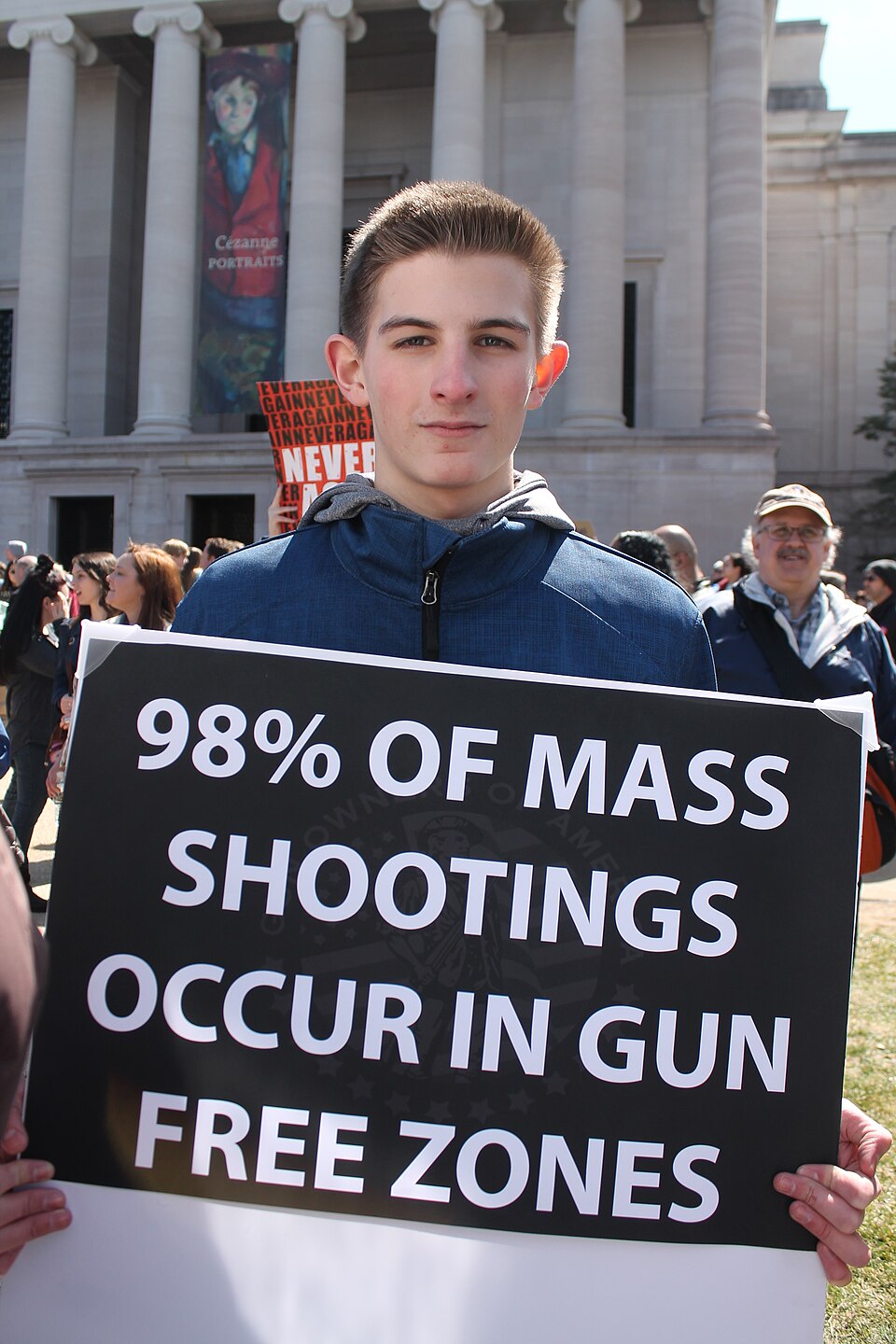
Gun control means the laws that decide who may own a gun, which guns they may own, and how guns are sold, stored and carried. The debate is about whether tighter rules, such as stronger background checks, bans on some weapons or limits on carrying guns in public, would save lives, or whether they would mostly burden law-abiding owners while criminals ignore them.
The United States is at the centre of the argument. American civilians own more than 393 million guns, about 120.5 for every 100 residents. That is roughly 46% of all civilian guns in the world, in a country with about 4% of the world's people.2 In 2023, 46,728 people in the US died from gun injuries. 58% of those deaths were suicides and 38% were murders, and about eight in ten American murders involved a gun.1
American law also protects gun ownership. In District of Columbia v. Heller (2008), the Supreme Court ruled 5 to 4 that the Second Amendment protects an individual's right to own a gun, and struck down Washington DC's handgun ban. It added: “Like most rights, the Second Amendment right is not unlimited.”3 In 2022, the Court ruled 6 to 3 that gun laws must be consistent with the nation's historical tradition of gun regulation.4
Elsewhere, mass shootings have often led to sweeping change. After a gunman killed 35 people at Port Arthur in 1996, Australia bought back and destroyed more than 650,000 semiautomatic and pump-action rifles and shotguns.6 Britain banned private ownership of handguns in 1997, after a gunman killed 16 children and their teacher at a school in Dunblane, Scotland.8 When 22 people were killed in Nova Scotia in 2020, Canada banned more than 1,500 models of assault-style firearms. “Canadians need more than thoughts and prayers,” Prime Minister Justin Trudeau said.18
The US has moved more slowly. In May 2022, 19 children and two teachers were killed at a school in Uvalde, Texas, and 10 people at a supermarket in Buffalo, New York. A month later Congress passed the Bipartisan Safer Communities Act, which added enhanced background checks and money for states that adopt “red flag” laws. It was described as the most significant federal gun law in nearly three decades.10 Yet in 2024 the Supreme Court struck down a federal ban on bump stocks, devices used in the 2017 Las Vegas shooting that killed 60 people.17
Americans remain divided. In a 2023 Gallup poll, 56% wanted stricter gun laws, 31% wanted them kept as they are and 12% wanted them less strict. Support for stricter laws was 88% among Democrats but only 26% among Republicans.11 About 72% of gun owners say protection is a major reason they own a gun.12
The main fault lines are about rights, evidence and who obeys the law. A RAND Corporation review found good evidence that some laws, such as rules on safe storage around children, reduce deaths, but too little evidence to judge others, such as assault weapons bans.5 Opponents add that 90% of prisoners who had a gun during their crime did not buy it from a store.13
Most gun control debates are won or lost on these four questions.
A question of values as much as evidence.
Both sides can point to research, and much of it is mixed.
The answer depends on where criminals get their guns.
The same gun can protect a family or be used in a tragedy.
The US: Americans own about 46% of the world's civilian guns, and the Supreme Court protects an individual right to own one.23
Australia, Britain, New Zealand and Canada: each tightened its laws sharply after a mass shooting, through buybacks or bans on handguns or semi-automatic weapons.68918
Japan: private citizens may not own handguns, and buying a shotgun takes more than a dozen steps, including exams and a police interview. Just one person was killed by gun violence in Japan in 2021.26
Switzerland: has about 2.3 million civilian guns, yet in 2019 more than 63% of voters approved tighter EU-style rules on semi-automatic rifles.24
Mexico: 70% of guns recovered there from 2014 to 2018 and traced came from the United States.14
Debate tip: comparing countries is useful evidence on both sides. Pro can point to low gun deaths where laws are strict; Con can argue that the US, with hundreds of millions of guns and a constitutional right, cannot simply copy another country.
For class or club discussion. There are no right answers; ask for reasons and evidence.
Arguments marked “Evidence needed” are waiting for a source before this guide goes live.
Anyone can suggest improvements. An editor checks every suggestion and source before it's added, and you're credited by name.