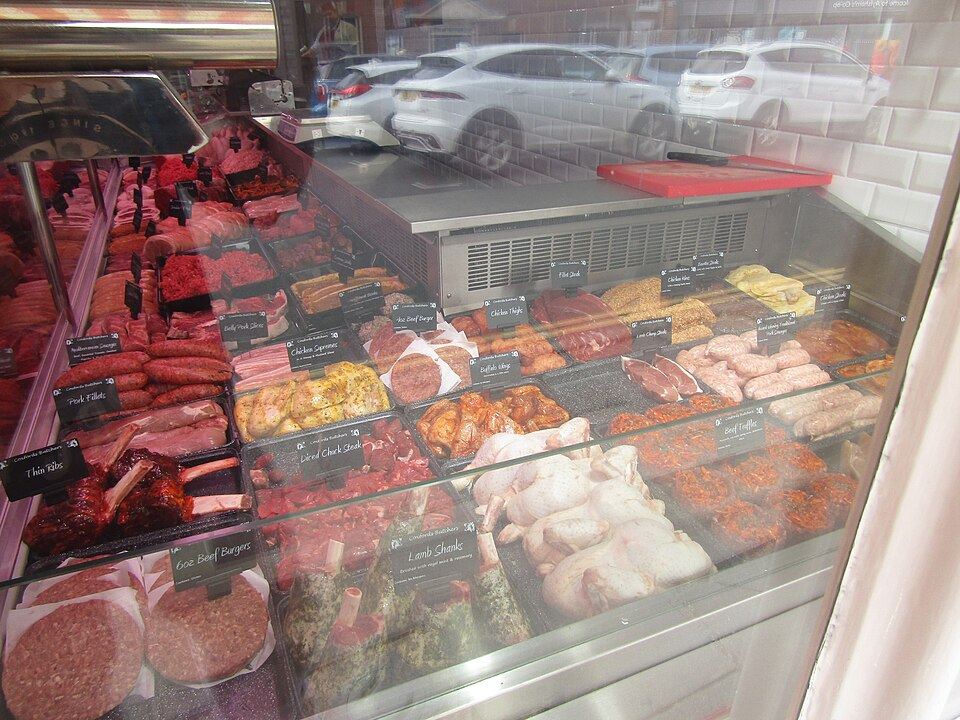
A meat tax is a charge that makes beef, pork, chicken and other meat more expensive. It can be added at the checkout, like a sales tax, or charged to the farms that raise the animals. Supporters give three main reasons for it: to cut the greenhouse gases that livestock release, to improve people's health, and to raise money for better treatment of farm animals.
The idea is fairly new in politics. In 2013, Sweden's Board of Agriculture raised the possibility of a meat tax, and government ministers quickly ruled it out. Agriculture minister Eskil Erlandsson said: “People should decide for themselves what they want in their refrigerator.”1920
The case for a tax starts with numbers. The UN Food and Agriculture Organization (FAO) estimates that livestock produce about 6.2 billion tonnes of greenhouse gases a year, around 12% of all emissions caused by humans, and expects demand for animal products to grow by 20% by 2050.1 A 2016 Oxford study found that beef would need to cost about 40% more worldwide to pay for its climate damage.6 Health is part of the argument too. In 2015 the World Health Organization's cancer agency classified processed meat as “carcinogenic to humans” and found that each 50 gram portion eaten daily raises the risk of colorectal cancer by 18%.8
In 2024 Denmark became the first country to agree a tax on livestock emissions. From 2030, farmers will be charged 300 kroner per tonne of emissions, rising to 750 kroner by 2035, though a 60% deduction cuts the real rates to 120 and 300 kroner.2 That works out at roughly $96 per dairy cow a year at first.4 “We will be the first country in the world that introduces a CO2 tax on agriculture,” said Climate Minister Lars Aagaard.2
New Zealand went the other way. Nearly half of its greenhouse gas emissions come from about 10 million cows and 26 million sheep, and a plan announced in 2022 would have priced farm emissions from 2025. After nationwide farmer protests and a change of government, the plan was scrapped in June 2024.5
In the United States, the picture looks different. Livestock produced 4.3% of US greenhouse gas emissions in 2022, according to government data, and ground beef reached a record average of $6.12 a pound in June 2025.1421
The main fault lines are about who pays and whether it works. Poorer households spend more of their income on food, and the EU farm lobby Copa-Cogeca warns that a meat tax “would be terribly regressive in practice.”13 Supporters reply that the money can be handed back to families.12 Public opinion depends on the reason given: in a 2023 German survey of 2,800 people, 62% backed a small meat tax, rising to 68% when it was presented as helping animal welfare.22