1Does social media cause harm, or is it only linked to it?
Both sides cite research. The fight is over what it proves.
Supporters say children need protecting from apps built to hook them. Opponents say a ban is hard to enforce and shuts teens out of their social lives.
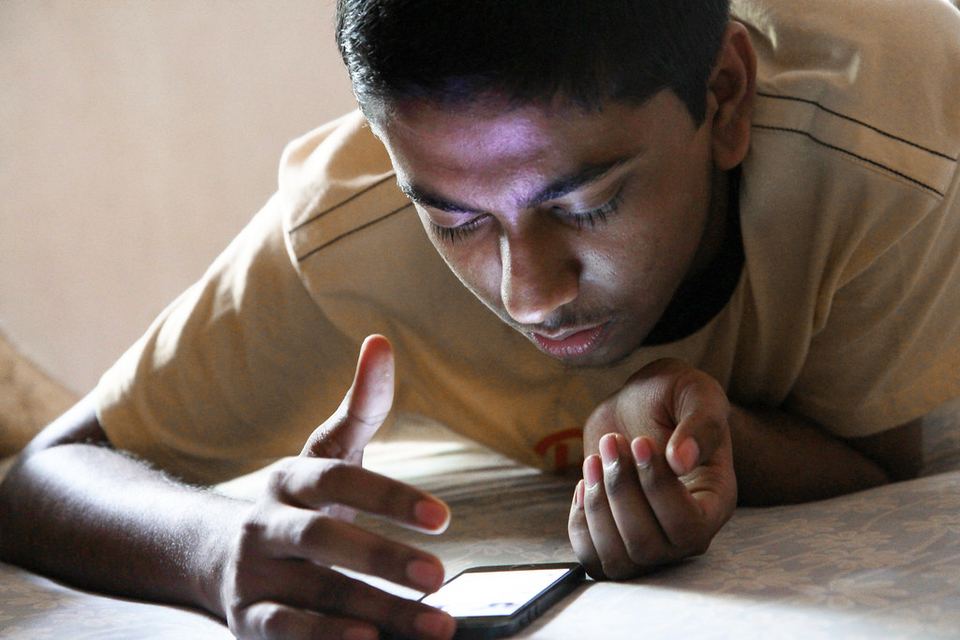
Social media means apps where people post, share and react to each other's content, such as Instagram, TikTok, Snapchat and YouTube. This debate asks whether governments should set a legal minimum age of 16, and force the platforms to check ages and close the accounts of younger children.
Worry about young users has grown quickly. In 2021, leaked internal Instagram research included a slide that read: “We make body image issues worse for one in three teen girls.”14 In 2023, the US Surgeon General warned that “we do not yet have enough evidence to determine if social media is sufficiently safe” for children and teens.6
Social media is part of almost every teenager's life. Up to 95% of Americans aged 13 to 17 use a social media platform, and nearly 40% of children aged 8 to 12 do too. As of 2021, 8th and 10th graders spent an average of 3.5 hours a day on social media, and teens who spent more than three hours a day faced double the risk of poor mental health outcomes.6
Australia moved first. Its parliament passed a ban for under-16s on November 29, 2024, with fines for platforms of up to A$49.5 million. Prime Minister Anthony Albanese said: “Social media is doing social harm to our kids. We've called time on it.”2 When the rules began on December 10, 2025, platforms restricted about 4.7 million accounts.1 Yet three months later, 81.5% of children aged 10 to 15 had still used an age-restricted platform in the past four weeks, down only slightly from 85.9% before the ban.3
Others are following. France passed a ban for under-15s in July 2026,29 and in November 2025 the European Parliament called for an EU-wide default minimum age of 16, though its vote is not binding.28 The US has no national ban, so states are acting. Florida bans accounts for under-14s and requires parental consent for 14- and 15-year-olds, and in October 2026 a federal appeals court let the state enforce the law.26 In Arkansas, a judge struck down an age-check law in 2025, saying the state “takes a hatchet to adults' and minors' protected speech alike.”25
The biggest fault line is the evidence. Supporters of a ban point to studies linking heavy use with depression, anxiety and poor sleep. But a 2023 report by the US National Academies of Sciences, Engineering, and Medicine found “there is not enough evidence to say that social media causes changes in adolescent health at the population level.”19 Teens themselves are split. In a 2024 Pew survey, 48% said social media has a mostly negative effect on people their age, but only 14% said the same about themselves.7
The other fault lines are about rights and about who should decide. In 2023, 81% of American adults supported requiring parental consent for minors to use social media, compared with 46% of teens.8 Critics warn that checking the age of every user means collecting sensitive data from adults and children alike.24
Most debates on this motion are won or lost on these four questions.
Both sides cite research. The fight is over what it proves.
Australia is the first real test, and both sides use its numbers.
A question about family freedom and peer pressure.
US courts have split on this question.
Australia: the first country with an under-16 ban, in force since December 10, 2025. Platforms, not children or parents, face fines of up to A$49.5 million.21
Europe: France passed a ban for under-15s in July 2026. Spain, Denmark and Greece have announced plans of their own, and the UK has said it would consider a ban.29 The European Parliament has called for a default EU age of 16, but its resolution is not binding.28
The US: there is no national ban. States are making their own rules, and courts have split: Florida's law has been allowed to go ahead, while Arkansas's was struck down.2625
Debate tip: Pro can point to a fast-growing list of countries acting together; Con can point to Australia's early results and ask why others should copy a policy before it has been shown to work.
For class or club discussion. There are no right answers; ask for reasons and evidence.
Arguments marked “Evidence needed” are waiting for a source before this guide goes live.
Anyone can suggest improvements. An editor checks every suggestion and source before it's added, and you're credited by name.