← All topics
Science and TechnologyBeginner to AdvancedWSDCBPPublic Forum

Should children under 16 be banned from social media?

Supporters say children need protecting from apps built to hook them. Opponents say a ban is hard to enforce and shuts teens out of their social lives.
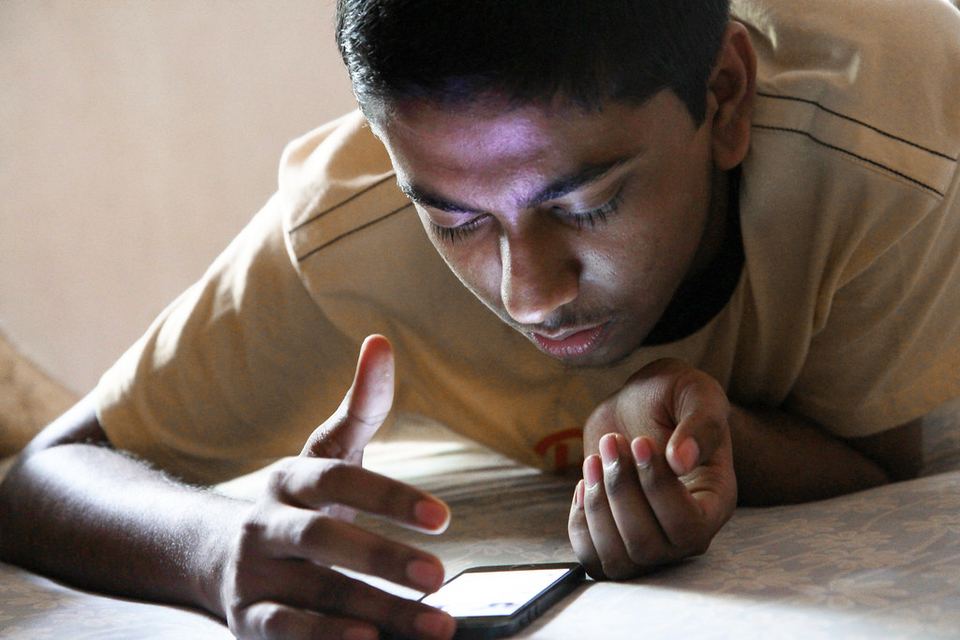
A teenager looking at a smartphone
pabak sarkar · CC BY 2.0
Motion: This House would ban social media for under-16s5 Pro · 5 Con · 30 sourcesOctober 2026

Introduction

Social media means apps where people post, share and react to each other's content, such as Instagram, TikTok, Snapchat and YouTube. This debate asks whether governments should set a legal minimum age of 16, and force the platforms to check ages and close the accounts of younger children.

Worry about young users has grown quickly. In 2021, leaked internal Instagram research included a slide that read: “We make body image issues worse for one in three teen girls.”14 In 2023, the US Surgeon General warned that “we do not yet have enough evidence to determine if social media is sufficiently safe” for children and teens.6

Social media is part of almost every teenager's life. Up to 95% of Americans aged 13 to 17 use a social media platform, and nearly 40% of children aged 8 to 12 do too. As of 2021, 8th and 10th graders spent an average of 3.5 hours a day on social media, and teens who spent more than three hours a day faced double the risk of poor mental health outcomes.6

Australia moved first. Its parliament passed a ban for under-16s on November 29, 2024, with fines for platforms of up to A$49.5 million. Prime Minister Anthony Albanese said: “Social media is doing social harm to our kids. We've called time on it.”2 When the rules began on December 10, 2025, platforms restricted about 4.7 million accounts.1 Yet three months later, 81.5% of children aged 10 to 15 had still used an age-restricted platform in the past four weeks, down only slightly from 85.9% before the ban.3

Others are following. France passed a ban for under-15s in July 2026,29 and in November 2025 the European Parliament called for an EU-wide default minimum age of 16, though its vote is not binding.28 The US has no national ban, so states are acting. Florida bans accounts for under-14s and requires parental consent for 14- and 15-year-olds, and in October 2026 a federal appeals court let the state enforce the law.26 In Arkansas, a judge struck down an age-check law in 2025, saying the state “takes a hatchet to adults' and minors' protected speech alike.”25

The biggest fault line is the evidence. Supporters of a ban point to studies linking heavy use with depression, anxiety and poor sleep. But a 2023 report by the US National Academies of Sciences, Engineering, and Medicine found “there is not enough evidence to say that social media causes changes in adolescent health at the population level.”19 Teens themselves are split. In a 2024 Pew survey, 48% said social media has a mostly negative effect on people their age, but only 14% said the same about themselves.7

The other fault lines are about rights and about who should decide. In 2023, 81% of American adults supported requiring parental consent for minors to use social media, compared with 46% of teens.8 Critics warn that checking the age of every user means collecting sensitive data from adults and children alike.24

Key terms

Social media platform
An app or website where users create profiles, post content and interact with others, such as Instagram, TikTok or Snapchat.
Minimum age law
A law that sets the youngest age at which someone may hold an account, and makes platforms responsible for enforcing it.
Age assurance
Any method a platform uses to estimate or check a user's age, from asking for a birth date to scanning a face or an ID card.
Parental consent
Permission from a parent or guardian before a child can open an account. Some laws use it instead of a full ban.
Algorithm
The computer rules a platform uses to decide which posts and videos to show each user, usually based on what keeps them watching.
Sextortion
Blackmail in which a criminal gets sexual images of someone, often a teenager, and threatens to share them unless paid.
First Amendment
The part of the US Constitution that protects freedom of speech. Courts use it to decide whether limits on online access go too far.
Digital literacy
The skills to use the internet safely and wisely, such as spotting false information and protecting your privacy.

Pros and cons at a glance

Pro: ban it for under-16s

    Con: don't ban it

      Pro arguments

      Con arguments

      Key clashes

      Most debates on this motion are won or lost on these four questions.

      1Does social media cause harm, or is it only linked to it?

      Both sides cite research. The fight is over what it proves.

      Pro saysNatural experiments, like Facebook's campus-by-campus rollout, show that access itself made student mental health worse.9
      Con saysThe National Academies found there is not enough evidence that social media changes adolescent health across the population.19

      2Can a ban actually be enforced?

      Australia is the first real test, and both sides use its numbers.

      Pro saysPlatforms restricted about 4.7 million accounts within weeks. No law is obeyed perfectly, and enforcement improves over time.1
      Con saysThree months in, 81.5% of children aged 10 to 15 were still using age-restricted platforms.3

      3Who should decide: parents or the law?

      A question about family freedom and peer pressure.

      Pro saysOne family cannot hold out alone when every other child is online. A law sets the same rule for everyone.30
      Con saysParents know their own children best. Rules like parental consent for 14- and 15-year-olds leave the choice with families.26

      4Protection or rights: which matters more?

      US courts have split on this question.

      Pro saysA carefully written law can protect children without burdening more speech than necessary, as one appeals court found for Florida.26
      Con saysAge checks are surveillance, and blocking whole platforms takes a hatchet to everyone's speech.2425

      Around the world

      Australia: the first country with an under-16 ban, in force since December 10, 2025. Platforms, not children or parents, face fines of up to A$49.5 million.21

      Europe: France passed a ban for under-15s in July 2026. Spain, Denmark and Greece have announced plans of their own, and the UK has said it would consider a ban.29 The European Parliament has called for a default EU age of 16, but its resolution is not binding.28

      The US: there is no national ban. States are making their own rules, and courts have split: Florida's law has been allowed to go ahead, while Arkansas's was struck down.2625

      Debate tip: Pro can point to a fast-growing list of countries acting together; Con can point to Australia's early results and ask why others should copy a policy before it has been shown to work.

      Discussion questions

      For class or club discussion. There are no right answers; ask for reasons and evidence.

      1. Should children under 16 be banned from social media? Explain your answer using at least one argument from each side.
      2. Is 16 the right age? What would change if the limit were 13, 15 or 18?
      3. If a ban is not fully obeyed, can it still be worth having? Compare it with age limits for alcohol or driving.
      4. Should the decision belong to parents, to governments or to teenagers themselves? Why?
      5. Would you give up some privacy, such as having your face scanned, to make the internet safer for younger children?

      Sources

      1. eSafety Commissioner (Australia), “Platforms restrict access to 4.7 million under-16 accounts across Australia,” media release, January 2026. LinkGovernment regulator
      2. Prime Minister of Australia, “Social media reforms to protect our kids online pass Parliament,” media release, November 29, 2024. LinkGovernment statement
      3. eSafety Commissioner (Australia), “Early days, early insights: Understanding experiences of social media age restrictions at the three-month follow-up,” August 2026. LinkGovernment report
      4. “Australia's under-16 social media ban failing, study shows: What it means,” Al Jazeera, August 3, 2026. LinkNews report
      5. YouGov, “Support for under-16 social media ban soars to 77% among Australians,” November 26, 2024. LinkPoll
      6. Office of the US Surgeon General, “Social Media and Youth Mental Health: The U.S. Surgeon General's Advisory,” 2023. LinkGovernment report
      7. Pew Research Center, “Teens, Social Media and Mental Health,” April 22, 2025. LinkResearch nonprofit
      8. Pew Research Center, “81% of U.S. adults versus 46% of teens favor parental consent for minors to use social media,” October 31, 2023. LinkResearch nonprofit
      9. Dylan Walsh, MIT Sloan School of Management, Ideas Made to Matter, September 14, 2022, reporting on Braghieri, Levy and Makarin, “Social Media and Mental Health,” American Economic Review, 2022. LinkPeer-reviewed study, via university
      10. Centers for Disease Control and Prevention, “Frequent Social Media Use and Experiences with Bullying Victimization, Persistent Feelings of Sadness or Hopelessness, and Suicide Risk Among High School Students: Youth Risk Behavior Survey, United States, 2023,” MMWR, 2024. LinkGovernment report
      11. American Psychological Association, “Health advisory on social media use in adolescence,” May 2023. LinkProfessional body
      12. Zara Abrams, “Why young brains are especially vulnerable to social media,” American Psychological Association, updated August 3, 2023. LinkProfessional body
      13. University of Cambridge, “Scientists find that the impact of social media on wellbeing varies across adolescence,” March 28, 2022, on Orben et al., Nature Communications. LinkPeer-reviewed study, via university
      14. “New company documents show Facebook knows Instagram is toxic for teen girls,” ABC7 News, September 15, 2021, reporting on The Wall Street Journal. LinkNews report
      15. “States sue Meta claiming Instagram, Facebook fueled youth mental health crisis,” NPR, via KAXE, October 24, 2023. LinkNews report
      16. “New Mexico jury says Meta harms children's mental health and safety, violating state law,” NPR, via KAXE, March 24, 2026. LinkNews report
      17. Federal Bureau of Investigation, “FBI and Partners Issue National Public Safety Alert on Financial Sextortion Schemes,” December 19, 2022. LinkGovernment statement
      18. CBS News, report on the coroner's conclusion in the Molly Russell inquest, September 30, 2022. LinkNews report
      19. National Academies of Sciences, Engineering, and Medicine, news release on the report Social Media and Adolescent Health, December 13, 2023. LinkNational research body
      20. Oxford Internet Institute, “Technology use explains at most 0.4% of adolescent wellbeing, new study finds,” January 22, 2019, on Orben and Przybylski, Nature Human Behaviour. LinkPeer-reviewed study, via university
      21. Candice L. Odgers, “The great rewiring: is social media really behind an epidemic of teenage mental illness?” Nature 628, April 4, 2024. LinkScientific journal review
      22. Arianna Prothero, report on LGBTQ+ students and online support, Education Week, May 3, 2024, on The Trevor Project's 2024 national survey. LinkSurvey, via news report
      23. UNICEF Australia, media release on the proposed social media ban, November 21, 2024. LinkUN agency
      24. Electronic Frontier Foundation, “Who's Harmed by Age Verification Mandates?” LinkAdvocacy group, own position
      25. “Federal judge declares Arkansas social media age-verification law unconstitutional,” Arkansas Advocate, April 1, 2025. LinkNews report
      26. Associated Press, “Florida wins key ruling allowing it to enforce a law that targets social media use by kids,” Atlanta Journal-Constitution, October 2026. LinkNews report
      27. Castan Centre for Human Rights Law, Monash University, “Two teens have launched a High Court challenge to the under-16s social media ban. Will it make a difference?” December 9, 2025. LinkUniversity analysis
      28. European Parliament, resolution on the protection of minors online, texts adopted, November 26, 2025. LinkParliament resolution
      29. Associated Press, “French lawmakers approve a sweeping social media ban for children under 15,” via WUNC, July 22, 2026. LinkNews report
      30. The Anxious Generation movement (Jonathan Haidt), “The Four New Norms To Free the Anxious Generation.” LinkAdvocacy campaign, own position

      Arguments marked “Evidence needed” are waiting for a source before this guide goes live.

      You might also debate

      Practise this topic

      Suggest an argument or source

      Anyone can suggest improvements. An editor checks every suggestion and source before it's added, and you're credited by name.

      Mockup: suggestions aren't saved yet.