← All topics
Science and TechnologyBeginner to AdvancedWSDCBPPublic Forum

Is social media good for society?

Supporters say it connects billions of people and gives everyone a voice. Critics point to misinformation, hate and harm to young people's mental health.

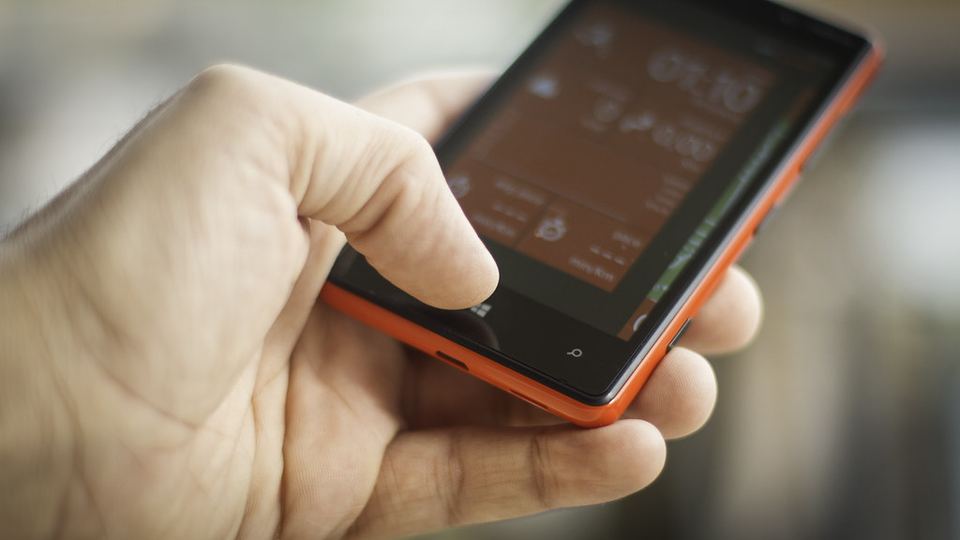
A hand holding a smartphone with apps on the screen
Nicola since 1972 · CC BY 2.0
Motion: This House believes social media has been good for society5 Pro · 5 Con · 30 sourcesEditor review: pending

Introduction

Social media are apps and websites, such as YouTube, Facebook, Instagram and TikTok, where people share posts, photos and videos and react to what others share. At the start of 2025 there were 5.24 billion social media user identities worldwide, about 63.9% of the world's population, and the typical internet user spent 2 hours and 21 minutes a day on social media.1

In the United States, 84% of adults say they use YouTube and 71% use Facebook, according to a 2025 Pew Research Center survey.2 Teenagers are even more connected. Up to 95% of Americans aged 13 to 17 use a social media platform, and more than a third say they use social media “almost constantly.”6

Social media's political power became clear in 2011, when protests swept Egypt and Tunisia. In the week before Egypt's president Hosni Mubarak resigned, tweets about political change in Egypt rose from 2,300 to 230,000 a day. “Social media became a critical part of the toolkit for greater freedom,” said University of Washington researcher Philip Howard.3 Since then, the #MeToo hashtag, used to share stories of abuse, was posted more than 19 million times on Twitter in less than a year after October 2017,10 and the 2014 ALS Ice Bucket Challenge raised over $115 million for the ALS Association.12

The same tools can spread hate. More than 700,000 Rohingya people fled a military campaign in Myanmar in 2017, and in 2018 UN investigators said Facebook had played a “determining role” in the crisis.45 In 2019, a terrorist streamed his attack on two mosques in Christchurch, New Zealand, live for 17 minutes. Fifty-one people were killed, and Facebook deleted 1.5 million videos of the shootings in the first 24 hours.2122

Worries about young people have grown too. In 2023 the US Surgeon General warned that teens who spend more than three hours a day on social media face double the risk of symptoms of depression and anxiety.6 In 2021, former Facebook employee Frances Haugen told the US Senate she believed the company's products “harm children, stoke division, and weaken our democracy.”7

Yet many young people describe real benefits. In a 2022 Pew survey, 80% of US teens said social media made them feel more connected to what is going on in their friends' lives, and 67% said it made them feel they have people who can support them through tough times.8 After reviewing the research in 2023, the National Academies of Sciences, Engineering, and Medicine said there is “not enough evidence to say that social media causes changes in adolescent health” across the whole population.18

So the debate turns on a few big questions. Do connection, free expression and new opportunities outweigh misinformation, hate and harm to mental health? Are the problems caused by social media itself, or by the way companies design it to keep people scrolling? And who should fix them: users, parents, companies or governments?
Key terms

Social media
Apps and websites where users create and share content, such as posts, photos and videos, and interact with each other.
Algorithm
The set of rules a platform uses to decide which posts each user sees, and in what order.
Engagement
Likes, comments, shares and time spent watching. Platforms often rank posts by how much engagement they are likely to get.
Misinformation
False or misleading information, whether or not the person sharing it knows it is false.
Disinformation
False information spread on purpose to deceive people.
Content moderation
The work of finding and removing posts that break a platform's rules or the law, done by people and by automated systems.
Infodemic
The World Health Organization's word for too much information, including false or misleading information, during a disease outbreak.
Creator economy
The businesses and jobs built by people who earn money by making videos, posts and other content online.

Pros and cons at a glance

Pro: good for society

    Con: bad for society

      Pro arguments

      Con arguments

      Key clashes

      Most debates on social media are won or lost on these four questions.

      1Mental health: does social media harm young people?

      Both sides cite the same research and read it differently.

      Pro saysA link is not proof of cause. The National Academies found there is not enough evidence that social media causes changes in adolescent health across the population.18
      Con saysHeavy users face double the risk of depression and anxiety symptoms, and the Surgeon General says there is not enough evidence that social media is safe for children.6

      2Voice or noise: does it strengthen democracy?

      The same openness that lets activists speak lets liars speak too.

      Pro saysMovements from the Arab Spring to #MeToo show ordinary people can now be heard without a newspaper or TV channel.310
      Con saysFalse news spreads faster and further than the truth, which weakens the shared facts that democracy depends on.19

      3Tool or product: is the problem the users or the design?

      This decides who should be held responsible.

      Pro saysSocial media is a tool. Most harm comes from a minority of users and can be tackled with better rules, moderation and education.
      Con saysPlatforms are designed to maximise attention, and their algorithms promote whatever keeps people scrolling, including hate.526

      4Balance: do the benefits outweigh the costs?

      Almost everyone agrees there are both. The question is the weighing.

      Pro saysBillions of people gain connection, information, support and income every day. The harms are real but can be reduced without losing these benefits.
      Con saysSome harms, like violence against the Rohingya or a teen's mental illness, are too serious to be balanced out by convenience and entertainment.

      Around the world

      The US: In October 2023, dozens of states sued Meta, alleging it designed features that “purposefully addict children and teens.”26 In January 2025 the Supreme Court unanimously upheld a law requiring TikTok's Chinese owner, ByteDance, to sell the app's US version or face a ban. The Court noted that TikTok serves more than 170 million Americans.28

      The European Union: Under the Digital Services Act, platforms with over 45 million users in the EU must assess and reduce “systemic risks” such as illegal content and threats to elections and public health.27

      Australia: From 10 December 2025, under-16s can no longer have accounts on age-restricted platforms such as Snapchat, TikTok, X and YouTube.29

      New Zealand and France: After the Christchurch attack, the two countries launched the Christchurch Call in May 2019, a commitment by governments and online companies to eliminate terrorist and violent extremist content online.22

      Debate tip: comparing countries is useful evidence on both sides. Pro can argue that most governments are choosing to regulate social media, not abolish it; Con can argue that so many new laws show how serious the harms have become.

      Discussion questions

      For class or club discussion. There are no right answers; ask for reasons and evidence.

      1. Has social media been good for society overall? Explain your answer using at least one argument from each side.
      2. Think about your own use of social media. Has it made your life better, worse, or both? Does your experience match the research?
      3. Should social media companies be responsible for harmful posts that users create, or only for what their algorithms choose to promote?
      4. Social media helped protesters in Egypt and spread hate in Myanmar. Is it fair to judge a tool by how its worst users behave?
      5. If you could change one thing about how social media works, what would it be, and who should make that change: users, companies or governments?

      Sources

      1. DataReportal (Kepios, We Are Social and Meltwater), “Digital 2025: Global Overview Report,” February 2025. LinkResearch report
      2. Pew Research Center, “Americans' Social Media Use 2025,” November 20, 2025. LinkResearch nonprofit
      3. Catherine O'Donnell, “New study quantifies use of social media in Arab Spring,” UW News, University of Washington, September 12, 2011. LinkUniversity research
      4. “U.N. investigators blame Facebook for spreading hate against Rohingya in Myanmar,” NBC News, March 2018. LinkNews report
      5. Amnesty International, “The Social Atrocity: Meta and the right to remedy for the Rohingya,” September 28, 2022. LinkHuman rights NGO
      6. US Surgeon General, “Social Media and Youth Mental Health: The U.S. Surgeon General's Advisory,” May 2023. LinkGovernment report
      7. Frances Haugen, opening statement to the US Senate Commerce subcommittee hearing on protecting kids online, October 5, 2021, transcript via Rev. LinkCongressional testimony
      8. Pew Research Center, “Teens and social media: Key findings from Pew Research Center surveys,” April 24, 2023 (survey of 1,316 US teens, April 14 to May 4, 2022). LinkResearch nonprofit
      9. Pew Research Center, “10 facts about teens and social media,” July 10, 2025. LinkResearch nonprofit
      10. Pew Research Center, “How social media users have discussed sexual harassment since #MeToo went viral,” October 11, 2018. LinkResearch nonprofit
      11. The Pulitzer Prizes, “Darnella Frazier: 2021 Special Citations and Awards.” LinkAward citation
      12. The ALS Association, “FDA Approves First ALS Treatment Funded by Ice Bucket Challenge,” September 29, 2022. LinkCharity statement
      13. Eric Sheridan, “The creator economy could approach half-a-trillion dollars by 2027,” Goldman Sachs Research, April 19, 2023. LinkFinancial research
      14. Lei Zou, Danqing Liao, Nina S.N. Lam and others, “Social Media for Emergency Rescue: An Analysis of Rescue Requests on Twitter during Hurricane Harvey,” arXiv, 2021. LinkAcademic study
      15. US Chamber of Commerce Technology Engagement Center, with Morning Consult and Facebook, “Examining the Impact of Technology on Small Business,” January 2018. LinkBusiness group survey
      16. Associated Press, “ALS-related gene found with help from Ice Bucket Challenge,” FOX 5 Atlanta, July 27, 2016. LinkNews report
      17. “LGBTQ+ Students Say They Get More Support Online Than at School and Home,” Education Week, May 2024, reporting the Trevor Project's 2024 national survey. LinkNews report
      18. National Academies of Sciences, Engineering, and Medicine, “To Minimize Harms and Maximize Benefits of Social Media to Adolescent Health, New Report Recommends Setting Industrywide Standards,” December 13, 2023. LinkNational research body
      19. Peter Dizikes, “Study: On Twitter, false news travels faster than true stories,” MIT News, March 8, 2018, on Vosoughi, Roy and Aral, “The Spread of True and False News Online,” Science. LinkPeer-reviewed study
      20. World Health Organization, “Understanding the infodemic and misinformation in the fight against COVID-19.” LinkInternational body
      21. “Facebook removed 1.5 million videos of New Zealand terror attack,” CBS News, March 17, 2019. LinkNews report
      22. Christchurch Call Foundation, “The Christchurch Call Story.” LinkIntergovernmental initiative
      23. “Facebook admits Cambridge Analytica hijacked data on up to 87M users,” TechCrunch, April 4, 2018. LinkNews report
      24. Federal Trade Commission, “FTC Imposes $5 Billion Penalty and Sweeping New Privacy Restrictions on Facebook,” July 24, 2019. LinkGovernment regulator
      25. “Facebook knows Instagram is harmful to teen girls: WSJ,” Al Jazeera, September 14, 2021, reporting The Wall Street Journal's Facebook Files. LinkNews report
      26. Rhode Island Office of the Attorney General, “Attorney General Neronha joins national bipartisan coalition of attorneys general suing Meta,” October 24, 2023. LinkState government
      27. European Commission, “DSA: Very large online platforms and search engines.” LinkEU law
      28. National Constitution Center, “Supreme Court allows TikTok ban to go into effect,” January 17, 2025, on TikTok v. Garland. LinkCourt ruling, via nonprofit
      29. Australian Government, Department of Infrastructure, Transport, Regional Development, Communications, Sport and the Arts, “New social media minimum age rules.” LinkGovernment
      30. Vivek Murthy's call for warning labels on social media, as reported by VOA News, “US surgeon general says social media apps need warning labels,” June 17, 2024. LinkNews report

      You might also debate

      Practise this topic

      Suggest an argument or source

      Anyone can suggest improvements. An editor checks every suggestion and source before it's added, and you're credited by name.

      Mockup: suggestions aren't saved yet.