What happens after a mental health day?
Illinois lets students take five mental health days a year, with a check-in from school staff built in. Its experience shows what these laws can do, and how much nobody yet knows.
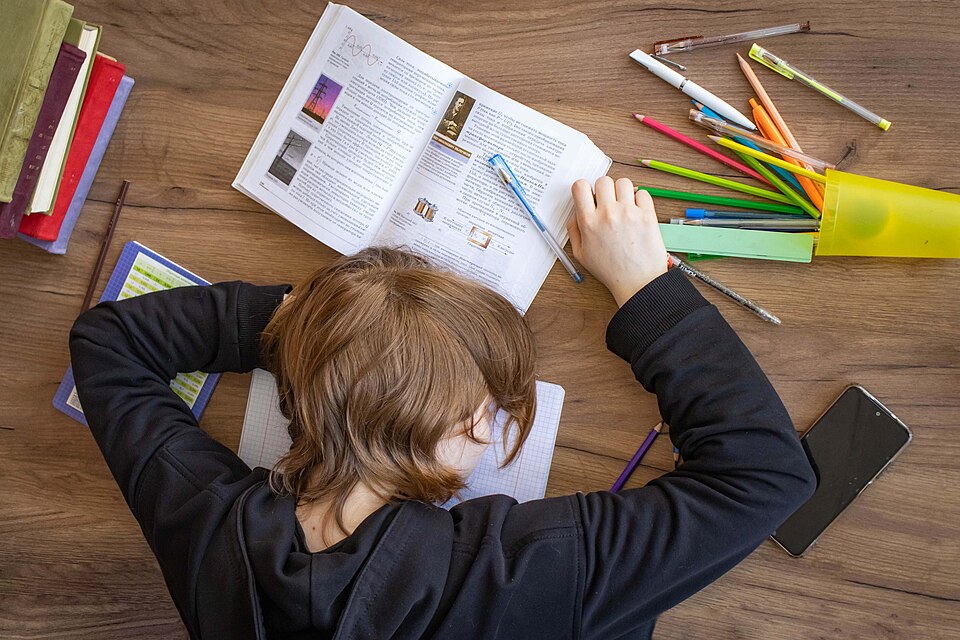
In 2022, school officials in Plainfield, Illinois, a district of more than 25,000 students near Chicago, counted something new. From early January to the end of the school year, 3,703 students had taken a combined 6,237 mental health days. That is nearly 15 percent of students, using an average of 1.7 days each. One detail stood out: 123 of those days were taken on the last day of school before summer break.1
Read one way, thousands of students got a break they needed. Read another, that last figure looks like an early start to the holidays. Chicago's public schools do not track them,2 and Illinois does not require schools to report how many students take mental health absences.1 That gap points to a question that gets less attention than the day itself: what happens after it?
A day off with a follow-up
Illinois's law took effect on January 1, 2022. It lets students take up to five excused mental or behavioral health days a year, with no doctor's note.3 The unusual part is the follow-up. After a student's second mental health absence, the district must refer them to "appropriate school support personnel," such as a counselor.1 State Representative Barbara Hernandez, who co-sponsored the bill, explained: "Many students are going through a lot mentally and emotionally and they need support."3
Most states have no such check. A February 2026 review by the American Institutes for Research counted 17 states that make mental or behavioral health an excused absence. Only six spell out a connection to extra support, and 13 set no maximum number of days. "The effectiveness of a policy relies on how it is implemented," the review notes.4
What students say
"When you're in school and not fully mentally there, it's like you're not really grasping anything anyway," said Linnea Sorensen, a 17-year-old junior at Schaumburg High School.1 In Chicago, Jones College Prep sophomore Meghan Cuddy said: "When I don't go to school or specific classes, I'm definitely more upbeat than I would typically be."2
Others see a catch. Anna Sanderson, another Schaumburg junior, worried about coming back: "If I miss a day because I'm overwhelmed or not feeling well mentally, I feel like when I go back, I'll only be worse."1 Even Cuddy saw limits: "I don't know many people who say their mental health is fixed because they took a mental health day."2
Rest or retreat?
Kelly Vaillancourt of the National Association of School Psychologists called the idea "laudable" and asked, "Why shouldn't we also be allowing kids to take the time they need if they're feeling mentally unwell?" But she added a condition: "At some point we have to make sure that allowing kids to take a day off to tend to their own needs is coupled with additional resources to help kids develop those strategies."5
For students with serious anxiety, the stakes are higher. Andrew Fuligni, a UCLA psychology professor, was blunt: "Almost any psychologist or clinical psychologist who works with children and youth will say that the answer to school refusal is not keeping them out of school, that is absolutely not the way to go."6 Jennifer Tininenko, who co-directs a child anxiety center in Seattle, says that for students who avoid school, "the willingness generally is there. It's just that anxiety or some other block is making it difficult for them to be there."7
In 2023 psychologists Lucy Foulkes and J. L. Andrews proposed "the prevalence inflation hypothesis", the idea that awareness efforts, while helpful, may lead some people to see milder distress as a disorder. They warned that "labelling distress as a mental health problem can affect an individual's self-concept and behaviour," for example by turning mild anxiety into avoidance that makes it worse.8
Advocates worry more about students feeling they cannot ask. Rachel Bhagwat of the National Alliance on Mental Illness Chicago said: "I would hope that schools would celebrate their students for taking care of their well-being and not create any unnecessary barriers or stress around doing that."2
For now, nobody knows who is right. "This is so new that there's not really a lot of data around it," Vaillancourt said.5 The 2026 review agrees that no research has yet studied how these policies work in practice.4
Questions to think about
If a mental health day comes with a call from a counselor, will students be more likely to get help, or less likely to ask for the day?
Should schools have to track how mental health days are used?
How can a school tell a student who needs rest from one whose anxiety grows by staying away?
For the strongest arguments on each side, see our pro and con guide below.
Should students get mental health days off school?
- Giles Bruce, KFF Health News, "States Fight Student Mental Health Crisis With Days Off," KFF Health News, June 13, 2022. Link
- Norah Hendrickson, "Chicago students welcome new law allowing them up to 5 mental health days," Chalkbeat Chicago, July 25, 2022. Link
- Aimee Barrows, Shaw Media, "Students will be able to take excused mental health days beginning in January," Daily Herald, August 30, 2021. Link
- Megan Gildin, "Excused Mental Health Absences: Current Policies and Implementation Considerations for Educational Leaders," American Institutes for Research, February 2026. Link
- Dan Grossman, Scripps News, "Are mental health days working in schools?," WPTV, May 23, 2023. Link
- Arianna Prothero, "Are Parents Giving Their Kids Too Many Mental Health Days?," Education Week, October 3, 2024. Link
- Ann Dornfeld, "When anxious kids won't go to school, what should parents and schools do?," KUOW, July 22, 2019. Link
- Lucy Foulkes and J. L. Andrews, "Are mental health awareness efforts contributing to the rise in reported mental health problems? A call to test the prevalence inflation hypothesis," New Ideas in Psychology, April 2023. Link